Across the SEC: Red River Heartbreak, a Personal Foul, and a Conference Turned Upside Down
Week 6 stripped three top-10 programs of their armor in a single Saturday — and the fallout says as much about the SEC's new 16-team, no-divisions era as it does about any final score

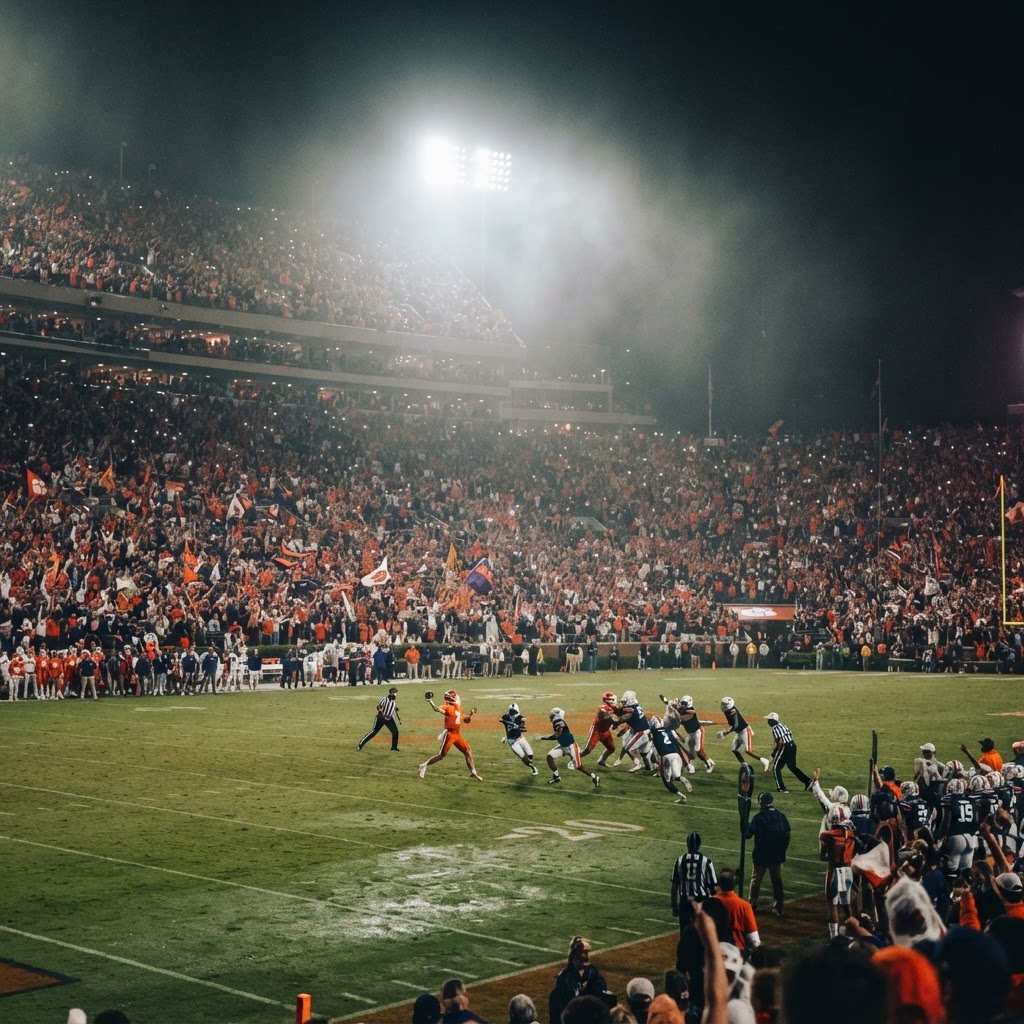
Red River Chaos and a Personal Foul Heard Across the SEC
There are Saturdays in the SEC, and then there are Saturdays that reset the entire conversation. October 10, 2026, was the latter. By the time the lights dimmed across the league's stadiums, three top-10 SEC programs had been handed defeats, the four-week reign of a No. 1 team had ended in the most geographically loaded rivalry in the sport, and a top-10 showdown between Georgia and Alabama had been decided not by a touchdown pass or a broken coverage, but by a personal foul penalty against Alabama's Lee in the closing minutes.
Oklahoma's dramatic, game-winning score against Texas headlined the day, but it did not happen in a vacuum. It happened in the first season in modern league history where all 16 SEC schools play a nine-game conference schedule, under a single unified standings table with no divisions, where three permanent rivals anchor every team's slate and the rest rotate. That structural shift matters enormously to how Week 6 should be read. A loss in October no longer gets cushioned by divisional math or a weaker crossover slate. Every result now lands directly in one shared column, visible to all 16 programs chasing a spot in Atlanta on December 5, when the 35th SEC Football Championship Game will be played at Mercedes-Benz Stadium.
So the questions worth asking are not just "who won and who lost." They are bigger: What do three top-10 losses in a single week actually tell us about the SEC's depth in year one of full parity scheduling? How much of Texas's fall and Alabama's collapse was about elite competition, and how much was self-inflicted? And with Missouri sitting at No. 14 after blowing out Florida, and Texas A&M traveling to Columbia on ABC the same day, how much did the rest of the league's hierarchy quietly shift while everyone stared at the Cotton Bowl and the Georgia-Alabama scoreboard?
What the Numbers Actually Say
The headline number from Week 6 is blunt: three top-10 SEC programs lost. In a conference that has spent years selling itself as the deepest in the country, that is either proof of concept or a warning sign, depending on which program you root for. Under the old division format, some of those results might have been quarantined to one side of the bracket. Under the 2026 single-table structure, they are not quarantined at all — they sit in full view, shaping a conference-wide standings race that every one of the 16 members can see in real time.
Texas is the number that matters most here. The Longhorns arrived at the Red River Rivalry having spent four consecutive weeks at No. 1 in the AP Top 25. That is not a fluke ranking or a product of a soft schedule glance — that is a team that had answered every question asked of it for a month. Oklahoma's game-winning score to beat that version of Texas is not just a rivalry trophy moment; it is a direct, first-person statement about the gap between the Sooners and the nation's presumptive top team, delivered in the sport's most charged 48 minutes.
Meanwhile, the Georgia-Alabama result is a different kind of number problem. Alabama mounted a furious comeback bid — the ground truth is explicit that it was "furious" — and still lost because of a personal foul penalty against Lee late in the game. That is not a talent gap number. That is a discipline number. Under the nine-game, unified-standings format, there is no division cushion to absorb a self-inflicted error like that; it goes straight into Alabama's ledger in the one table that decides who plays for a trophy in Atlanta.
And then there is Missouri, sitting at No. 14 after a signature blowout of Florida, hosting Texas A&M on ABC the same Saturday. That game didn't carry the same national spotlight as Dallas or Athens, but in a 16-team, single-standings league, every SEC game is now, by definition, a standings game. Missouri's ranking heading into that matchup is itself a number worth sitting with: a team good enough to blow out a fellow SEC program and crack the AP top 14 before October was even half over.
The Quality of the Opponents Wasn't in Question
One of the lazier reflexes in college football commentary is to discount a loss by questioning the opponent. That reflex doesn't survive contact with Week 6. Texas wasn't ambushed by a pretender; the Longhorns had been the No. 1 team in the country for a full month before walking into the Cotton Bowl against Oklahoma. There is no asterisk available here — Oklahoma beat the best team in the sport, by national consensus, on the sport's biggest rivalry stage.
Georgia's win over Alabama carries the same weight in the other direction: this was a top-10 clash between two programs that have defined SEC championship contention for the better part of two decades. Alabama didn't fold; the ground truth is clear that the Crimson Tide mounted a real, "furious" comeback bid. The opponent quality was never the issue in Athens. The issue was discipline — specifically, a personal foul on Lee at the exact moment Alabama needed to play its cleanest football of the night.
Missouri's resume deserves the same scrutiny rather than dismissal. A blowout win over Florida is not a win over a doormat — it's a win over a fellow SEC program in a league where, this season more than any other, there is no scheduling mercy. Every SEC team now plays nine conference games, with three permanent rivals and six rotating opponents, meaning Missouri's path to No. 14 ran through real SEC competition, not a padded non-conference slate.
Texas A&M's trip to Columbia to face that No. 14 Missouri team on ABC is its own quality test, independent of how the day unfolded elsewhere. In a league where the standings are now one shared column for all 16 programs, a ranked SEC-on-SEC game on national television in Week 6 is exactly the kind of November-feeling stakes the conference wanted when it restructured the schedule in the first place.
What This Means for the Ceilings in Norman and Athens — and the Floor in Tuscaloosa and Austin
Start with Oklahoma. Beating a four-week No. 1 Texas team on a game-winning score in the Red River Rivalry doesn't just make for a great Saturday — it immediately reframes the Sooners' ceiling in a league that now funnels every result into one unified table ahead of the December 5 championship game in Atlanta. There is no division to hide behind, no separate bracket to protect a rival from a head-to-head accounting. Oklahoma's win is now sitting directly in the same column Texas needs to climb back through.
Georgia's ceiling question is less about proving it can beat Alabama — the Bulldogs have done that plenty over the years — and more about what it means to do so in year one of the nine-game, no-divisions format, where a win over a top-10 rival carries full, undiluted weight in the single standings race toward Atlanta. Alabama's floor, meanwhile, got lower the moment the personal foul on Lee turned a furious comeback into a loss. In a conference without divisional insulation, a self-inflicted penalty like that doesn't just cost a possession; it costs standing in the one table every program is being measured against all year.
Texas's ceiling is the most complicated to assess. Four weeks at No. 1 is not an accident, and one loss — even a dramatic, rivalry-defining one — does not erase that body of work. But the unified standings structure means the Longhorns can no longer lean on a weaker division schedule to recover ground. Every remaining game is now, mathematically and symbolically, a referendum on whether that four-week run atop the polls was earned or inflated.
And Missouri's ceiling deserves real consideration here too. A No. 14 ranking built on a blowout of Florida, followed immediately by a ranked showdown against Texas A&M on national television, is precisely the kind of résumé the new scheduling format was designed to reward: a program forced to play real SEC competition from three permanent rivals plus six rotating opponents, with nowhere to hide and no division to pad the record.
The Coaching and Roster Angle
Discipline is a coaching stat whether or not it shows up in a box score, and the personal foul penalty against Lee that ended Alabama's comeback bid against Georgia belongs in that conversation. In a nine-game SEC slate with a single shared standings table, there is zero margin for a mental-error penalty in a top-10 rivalry game in the fourth quarter. That is not a talent evaluation — it is a program-discipline evaluation, and it happened at the worst possible moment against the worst possible opponent to make that mistake in front of.
Elsewhere in the league, the coaching storylines are only getting started. Lane Kiffin at LSU, Jon Sumrall at Florida, Will Stein at Kentucky, and Alex Golesh at Auburn are all navigating their first SEC campaigns at their respective new programs in a season that has already produced three top-10 upsets in a single week. That is as hostile an introduction to SEC football as a first-year staff can get — a conference where every one of the 16 members now plays nine true conference games, and where a single Saturday can upend the entire national conversation.
For those four coaches, Week 6's chaos is not background noise; it's a preview of the environment they're being asked to win in immediately. A league where Texas can spend a month at No. 1 and still lose to its oldest rival, where Georgia-Alabama can be decided by a personal foul rather than a broken play, and where Missouri can blow out Florida and climb into the top 14 — that is a league with essentially no soft landings for a rebuilding program or a first-year staff still installing systems.
The roster-discipline thread and the first-year-coach thread ultimately intersect at the same point: in the 2026 SEC, with no divisions to soften the blow and a single table feeding one championship game in Atlanta, every mental error and every quality win carries full weight from Week 1 onward. There is no "building toward conference play" grace period anymore. Week 6 made that unmistakably clear.
The National Reaction
It's not hard to understand why Week 6 sparked the level of national debate it did. A sport that had crowned Texas the No. 1 team for four consecutive weeks watched that team lose its signature rivalry game on a dramatic, last-second-feeling score. A top-10 SEC showdown between Georgia and Alabama — a matchup with two decades of championship history behind it — was decided by a personal foul penalty rather than a highlight-reel play. And all of it happened in the very first season of a restructured SEC where every result now funnels into one shared standings column for all 16 teams.
That combination — a fallen No. 1, a rivalry decided by discipline rather than execution, and a new league format with no divisions to hide behind — is exactly the kind of cocktail that drives wall-to-wall debate. Critics of the SEC's depth narrative will point to three top-10 losses in a single week as evidence that the league's ranked teams were overrated to begin with. Defenders will point to the same three results as proof that the conference is now so deep and so evenly structured, under the new nine-game unified format, that no ranking is safe on any given Saturday.
Both arguments can be true at once, and that tension is precisely why the sport spent the day after Week 6 arguing about it. A four-week No. 1 team losing to its most bitter rival is a story that transcends conference lines. A top-10 rivalry decided by a personal foul is a story about discipline that every fan base, regardless of allegiance, has an opinion on. Put both in the same 24-hour window, inside a league running its most structurally different season in modern history, and the national reaction writes itself.
What Happens Next
The practical question now is how fast anyone recovers in a league with no divisional insulation left. Texas's remaining schedule is no longer just about staying ranked — it's about climbing back up a single shared table that already has Oklahoma's name above it in the head-to-head column. Alabama faces the same dynamic after the Georgia loss: the personal foul on Lee is in the past, but its consequence — a loss sitting in the one table that determines who reaches the December 5 championship game in Atlanta — is not going anywhere.
Missouri's path is arguably the most interesting to track precisely because it carries less baggage. A No. 14 ranking built on a Florida blowout, paired with a ranked ABC showdown against Texas A&M the same week, puts the Tigers in position to keep climbing a standings table where, for the first time, every SEC program's nine conference games count equally toward the same destination. There is no division title to distract from the larger goal; there is only the single table and the road to Atlanta.
For the four first-year coaches — Kiffin at LSU, Sumrall at Florida, Stein at Kentucky, and Golesh at Auburn — the rest of the season is now a test of whether their programs can avoid becoming the next cautionary tale in a league that just produced three top-10 upsets in a single week. The margin for the kind of mental error that cost Alabama its comeback bid against Georgia simply does not exist in a nine-game, no-divisions SEC. Every remaining Saturday between now and December 5 will be judged against that reality.
The Bottom Line
Week 6 did not just produce a dramatic Red River finish and a bitter Georgia-Alabama ending — it served as the first real stress test of the SEC's new nine-game, single-standings, no-divisions structure, and the structure passed that test by exposing exactly what it was designed to expose. Three top-10 programs lost because the format no longer allows any team, however highly ranked, to coast through a soft divisional slate. Oklahoma's win over a four-week No. 1 Texas and Georgia's win over a furiously rallying Alabama both now sit, unfiltered, in the same shared column that every one of the SEC's 16 members is chasing toward Atlanta on December 5.
The verdict on Week 6, then, isn't really about who was better on a single Saturday. It's about a conference that just proved its new format has teeth — teeth sharp enough to end a month-long No. 1 reign and punish a single personal foul with a loss that will follow Alabama all season. In the first year of the fully unified SEC, there are no hiding places left, and October 10, 2026, made sure everyone in the league knows it.
Published 1 day ago
Staff
Staff writer for SEC Saturday Wire covering college sports.
Process Notes & Methodology
Treat the day as a case study in what the SEC's brand-new, division-less, nine-game, single-standings format actually does to the stakes of a single Saturday — frame Oklahoma-Texas and Georgia-Alabama not just as isolated results but as the first real proof points of that structural change, while weaving in Missouri/Texas A&M and the four first-year coaches as supporting threads that show the conference-wide ripple effect, without ever inventing a score, stat, or quote beyond what's given.
Open with the scale of the day (three top-10 losses) and immediately tie it to the new 2026 SEC structure (16 teams, 9 conference games, no divisions, single standings table, three permanent rivals, Dec 5 championship in Atlanta) so the lede frames format as destiny, then pose the analytical questions the rest of the piece will answer.
Built six analytical sections as required: a numbers section emphasizing the four-week No.1 Texas run and the personal foul on Lee as the two hard data points; an opponent-quality section defending Texas, Georgia/Alabama, and Missouri's resumes against dismissal; a ceiling/floor section separating Oklahoma/Georgia upside from Texas/Alabama downside under the no-divisions format; a coaching/roster section connecting the Lee penalty to discipline and pivoting to the four first-year coaches (Kiffin, Sumrall, Stein, Golesh) facing this environment immediately; a national reaction section framing the dual narrative (SEC overrated vs. SEC proven deep); and a what's-next section projecting forward to Missouri/Texas A&M's standings relevance and the road to the Dec 5 Atlanta championship, all strictly using only the provided ground truth facts.
Closed with a two-paragraph verdict arguing the real story isn't who won individual games but that the new format itself was stress-tested and proved consequential — tying the four-week Texas No.1 fall and the Lee personal foul together as the clearest evidence that there's no insulation left in the 2026 SEC, landing the piece on a definitive, format-centric conclusion.
See something wrong? Fix it.
We're the first crowdsourced college football site. Submit corrections — our editors review every one.