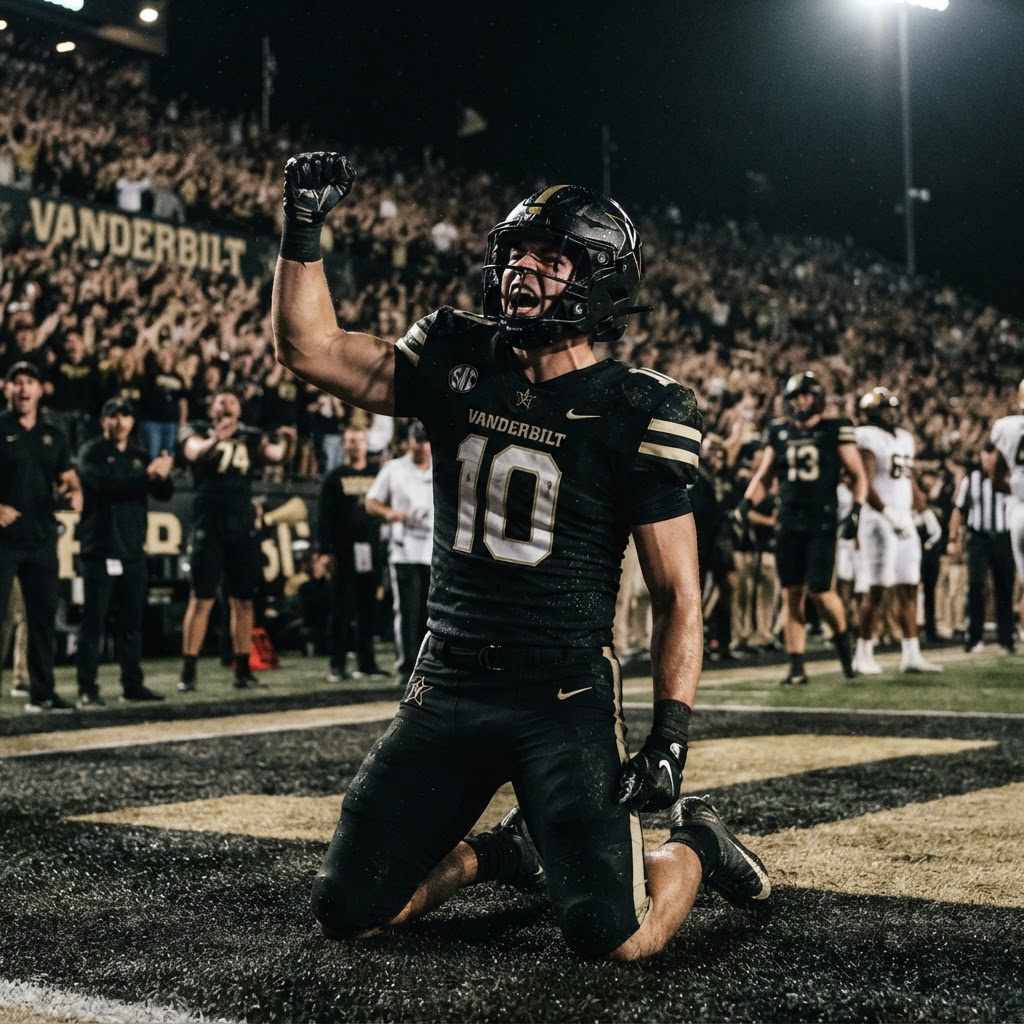
Anchored in History: Clark Lea’s Vision and the Future of Vanderbilt Football
As the 2026 season gains momentum, the Commodores look toward a new chapter while honoring the foundational goals set by their long-standing leadership.

The Weight of Expectations
The air in Nashville remains heavy with the anticipation of another autumn under the lights. As we traverse the early weeks of the 2026 season, there is a tangible sense that the Vanderbilt program is operating with a renewed sense of institutional gravity. Entering his sixth year at the helm, Clark Lea has navigated the complexities of modern college football with a steady hand, focusing on the cultural identity that defines the Commodores.
The Architecture of Continuity
Success in the SEC is rarely linear, yet continuity often acts as a catalyst for growth. With a foundation built since December 2020, Lea has spent the last half-decade constructing an infrastructure capable of enduring the rigorous demands of the conference. The current roster, featuring stalwarts like Junior Sherrill, Cole Spence, Bryan Longwell, and Miles Capers, reflects the persistence of a coaching staff committed to long-term development rather than short-term fixes.
Defining the Signal Caller
One of the most compelling narratives as the season unfolds involves the evolving battle under center. While the starting quarterback remains a mystery, the presence of Blaze Berlowitz and Drew Cowart in the quarterback room creates a competitive environment that is vital for program health. The eventual emergence of an alpha in this group will dictate the ceiling for the Commodores this year, as the staff seeks a leader who can master the nuances of the offensive system.
Strategic Horizons
The program is not merely looking at the next snap, but at the horizon of the coming years. Recent announcements regarding kickoff windows and the strategic scheduling of a home-and-home series with Virginia signify an athletic department that is actively positioning Vanderbilt for prominence on a larger stage.
True program stability is not measured by the volatility of a single season, but by the relentless pursuit of an identity that remains unshakable regardless of the scoreboard.
Building for the Future
Looking ahead, the focus for Lea and his staff is clear: execution on the field must match the deliberate planning happening in the offices. As the Commodores settle into the rhythm of the 2026 season, the combination of veteran leadership and the promise of future competitive matchups suggests that Vanderbilt is methodically working toward a more stable and formidable future.
Published about 1 month ago
Staff
Staff writer for SEC Saturday Wire covering college sports.
Process Notes & Methodology
The article focuses on Clark Lea's six-year tenure and the program's strategic path, using the current 2026 season kickoff status to frame a narrative of stability and future growth. This is relevant as it contextualizes the current status of the program within the long-term project led by Lea.
The opening uses the start of the 2026-2027 season to anchor the discussion, highlighting Clark Lea's sixth year as the foundational fact driving the team's identity.
The body content integrates the presence of key returners like Sherrill and Spence, the current QB depth chart of Berlowitz and Cowart, and the recent administrative updates regarding scheduling and kickoff windows.
The conclusion pivots toward the long-term scheduling goals, effectively setting up the program's vision for future non-conference matchups.
See something wrong? Fix it.
We're the first crowdsourced college football site. Submit corrections — our editors review every one.