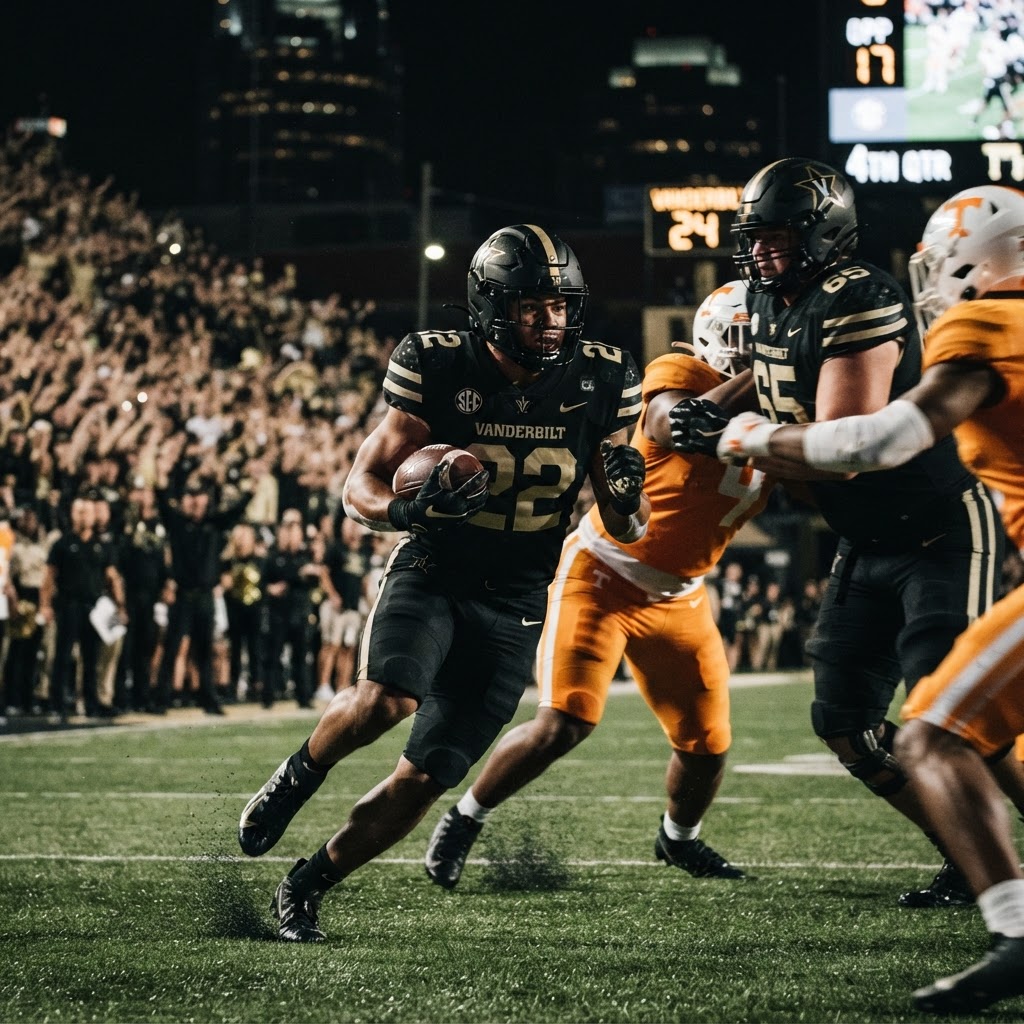
Architecting Resilience: Clark Lea's Long-Game Vision for Vanderbilt
As the 2026 season ignites, Vanderbilt remains committed to a culture built from within, steering clear of the volatile portal carousel.

The Foundation Beneath the Concrete
Nashville mornings in early September carry a distinct weight, a blend of humid air and the quiet, rhythmic thud of footballs hitting turf at Vanderbilt Stadium. For head coach Clark Lea, entering his sixth year at the helm, the 2026 season is not merely another slate of games—it is the fruition of a structural philosophy that refuses to take shortcuts. While the wider college football landscape remains obsessed with the daily churn of the transfer portal, the Commodores have carved out a different identity, one anchored in the belief that true growth happens in the laboratory of the practice field.
Defining Identity in a Volatile Era
In a college football economy defined by constant movement, Vanderbilt’s current roster strategy stands as a defiant outlier. With no significant recent transfer activity, the program has doubled down on the development of existing personnel. The focus remains squarely on the returning core, including key contributors like Junior Sherrill, Cole Spence, Bryan Longwell, and Miles Capers. This is a team that prizes continuity above the allure of quick-fix acquisitions, betting that the collective chemistry of a veteran group will outweigh the flash of external arrivals.
The Quarterback Conundrum
Under center, the narrative remains a blank canvas of immense potential. As the team prepares for the rigors of the 2026 season, the battle between Blaze Berlowitz and Drew Cowart continues to serve as the team’s most compelling internal sub-plot. There is no coronation here, only a high-stakes competition that pushes both players to refine their craft daily. The coaching staff understands that the long-term success of the program relies on the steady hand of a leader who has been molded within the Commodore system rather than imported from elsewhere.
Analytical Perspective
True team evolution is measured not by the talent an organization captures from the ether, but by the ceiling it raises for the players currently in its building.
The Road Ahead
Beyond the immediate preparation for the upcoming schedule, the program’s trajectory remains fixed on long-term stability. The recent announcement of kickoff windows for 2026 and the exciting news of a future home-and-home series with Virginia signal a program that is thinking years, not just weeks, down the road. As the Commodores embrace the challenges of the 2026 season, the blueprint is clear: progress is a product of patience, and the best way forward is to finish what you started with the men standing next to you.
Published about 1 month ago
Staff
Staff writer for SEC Saturday Wire covering college sports.
Process Notes & Methodology
The story centers on Clark Lea's philosophy of internal development rather than heavy transfer portal reliance. It highlights how Vandy builds culture by sticking to its core players rather than chasing external talent.
The intro sets a scene-setting mood in Nashville, anchoring the narrative to Clark Lea's sixth year of leadership at the start of the 2026-2027 season.
The body leverages the specific QB depth of Berlowitz and Cowart, the retention of key players like Sherrill and Spence, and the long-term scheduling news to illustrate a program focused on future-proofing through stability.
The closing highlights the Virginia home-and-home series to pivot toward a long-term future, reinforcing the idea that the program is playing the long game.
See something wrong? Fix it.
We're the first crowdsourced college football site. Submit corrections — our editors review every one.