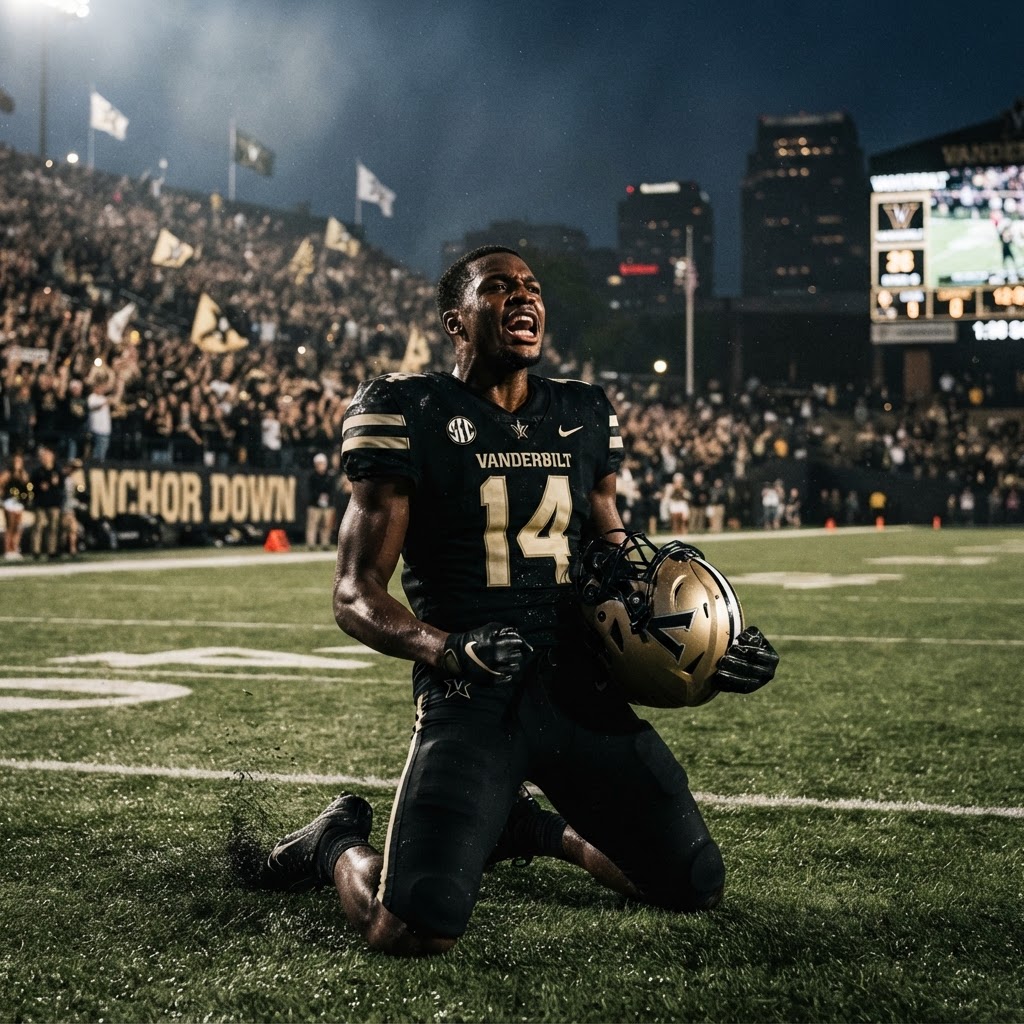
Forged in the Nashville Heat: Inside Vanderbilt's Pursuit of SEC Permanence
After a historic 10-win campaign and a top-15 national finish, Clark Lea’s Commodores are utilizing a grueling summer strength program to transition from a Cinderella story into a sustained SEC powerhouse.

The Clanging Iron of a New Era
The heat index in Nashville on this mid-July morning is unforgiving, a thick, suffocating blanket of humidity that turns the air into a physical obstacle. Inside the Vanderbilt football training facility, the climate is equally intense, though meticulously controlled. The rhythmic, concussive slams of iron meeting rubber echo through the cavernous weight room on this Workout Wednesday. It is the unmistakable soundtrack of a college football program desperately trying to ensure that history is a stepping stone, not a summit.
As we navigate the grueling heart of the 2026 summer conditioning block, the atmosphere surrounding the Vanderbilt Commodores is fundamentally different than it was a year ago. Following a historic, school-record 10-2 campaign in 2025 that culminated in a stunning #14 ranking in the final College Football Playoff standings, the narrative has shifted. Under the exacting eye of head coach Clark Lea—now firmly established as the undisputed architect of the program's most successful modern era—the Commodores are not resting on the laurels of last autumn. Instead, they are locked in a physical crucible, preparing to prove that their unprecedented rise was not merely a lightning strike, but a permanent climate change in the SEC ecosystem.
From Foundation to Identity at SEC Media Days
That paradigm shift was palpable just days ago at SEC Media Days in Dallas. For decades, Vanderbilt's podium presence at the annual media circus was treated as a preamble, a polite nod to the league's academic standard-bearer before the heavyweights took the stage. This year, the Commodore contingent arrived to an atmosphere of sustained expectation rather than patronizing surprise. Preseason buzz currently holds Vanderbilt firmly inside the Top 20 of several major national projections, effectively burying the basement-dweller narrative of years past.
Lea took to the microphone with the quiet confidence of a man whose blueprint has finally been validated. Flanked by veteran running back Sedrick Alexander, dynamic wide receiver Junior Sherrill, and formidable edge rusher Issa Ouattara, Lea delivered the defining soundbite of the offseason. The "foundation" phase, he declared, is officially over. Vanderbilt has now entered its "identity" phase. The presence of Alexander, Sherrill, and Ouattara in Dallas was a statement in itself—proof that a program historically vulnerable to the poachers of the transfer portal has successfully retained its premier homegrown talent while simultaneously reloading through aggressive acquisitions.
The Bedrock of Bulk: Stiner’s Laboratory
The translation of Lea’s philosophy from podium rhetoric to on-field reality falls heavily on the shoulders of strength coach Robert Stiner. In the modern SEC, scheme only matters if the athletes executing it can withstand four quarters of blunt-force trauma. Stiner’s comprehensive strength and conditioning program has been universally cited as the "bedrock" of the team's physical transformation this offseason, and the raw data is nothing short of staggering.
Internal program reports indicate that the roster is averaging a 12-pound gain in lean muscle mass across the offensive and defensive lines since January. Even more critical to Vanderbilt's defensive scheme, the edge-rushing group has bulked up considerably, boasting a staggering 16.4-pound average weight gain. This is not arbitrary mass; it is functional armor designed for the trenches. The late-summer portal window further bolstered this mandate, with the staff securing crucial depth on the offensive line through the strategic addition of Micah DeBose. These physical transformations are the mandatory table stakes for a team staring down a 2026 slate that features five road games in some of the most relentlessly hostile environments the conference has to offer.
The Curtis Era and an Evolving Offensive Arsenal
For all the iron moved in the weight room, the most consequential storyline of the Vanderbilt offseason revolves around the man taking the snaps. The headline echoing out of Dallas was the official, definitive elevation of five-star freshman Jared Curtis to QB1. Since officially signing his letter of intent on December 3, 2025, Curtis has carried the immense weight of being the crown jewel of Lea's rebuilding effort.
Stepping into the void left by the departure of Diego Pavia is no simple task. Pavia’s unorthodox, improvisational magic was the emotional engine of the 2025 run. But under the direction of offensive coordinator Tim Beck, the scheme is undergoing a sophisticated evolution. The staff is actively shifting the playbook toward a more prototypical, vertical downfield attack engineered to maximize Curtis’s elite arm talent. It is a calculated gamble: trading the unpredictable chaos of a scramble-drill savant for the structural devastation of a classic, high-octane passing game.
The central question hovering over Vanderbilt this summer is no longer whether they can compete in the SEC, but whether a program whose breakout was heavily tethered to the singular, chaotic magic of a generational quarterback can mass-produce sustained victories through an elite, modernized scheme.
To support Curtis, Beck is leaning heavily on specialized formations and roster continuity. With the late-2025 portal departure of tight end Witt Edwards, the spotlight turns to projected starter Brycen Coleman, whose chemistry with Curtis during 7-on-7 drills has been a major talking point inside the facility. Paired with a fortified offensive line and the returning explosiveness of Sherrill on the perimeter, the Commodores are assembling an offense that theoretically relies less on miracles and more on sheer execution.
Fortifying the Gates: A Defensive Mandate
While the offense dominated the highlight reels in 2025, Clark Lea was quick to remind the media in Dallas that Vanderbilt’s ultimate ceiling rests on a sweeping defensive overhaul. Defensive coordinator Steve Gregory has spent the spring and summer preaching the gospel of "resilience." The objective is to build a defense that doesn't just hold leads at FirstBank Stadium, but one that travels—a unit capable of silencing 90,000 screaming fans in hostile territory.
To accomplish this, the Commodores imported an impressive class of 16 transfers for the 2026 cycle. Leading that charge are high-impact additions CJ Jackson on the edge and Ricardo Jones at safety. Both veterans have rapidly integrated into the locker room culture, earning high praise from the coaching staff for their vocal leadership during the grueling summer conditioning sprints. In a league where secondary blown coverages and missed tackles in the fourth quarter define the line between a New Year's Six bowl and an also-ran season, the physical maturity of players like Jackson and Jones is indispensable.
Sustaining the Empire
The momentum generated by the 2025 campaign is actively bleeding into the program's long-term future. Vanderbilt parlayed its Top-15 finish into unprecedented recruiting leverage, recently landing elite 2027 prospects like three-star linebacker Ethan Hauser, who chose the Commodores over a litany of historic Power 4 offers on May 28. Furthermore, the athletic department is scheduling with the swagger of a true contender, recently announcing a highly anticipated home-and-home series with Virginia—marking the programs' first meeting since 1975.
As the final whistle blows on another Workout Wednesday and the players unlace their cleats, the reality of the 2026 season looms large. The sweat equity invested in Stiner's weight room, the tactical midnight oil burned by Tim Beck and Steve Gregory, and the sky-high potential of Jared Curtis are all converging into a singular, undeniable truth.
Vanderbilt football is no longer college football's heartwarming underdog story. They are a deeply talented, structurally sound, and physically imposing program with a target firmly affixed to their backs. And as the Nashville summer heat continues to rise, so do the expectations for a team that has definitively proven it belongs among the elite.
Published 3 months ago
Staff
Staff writer for SEC Saturday Wire covering college sports.
Process Notes & Methodology
The article focuses on how the Vanderbilt football program is leveraging summer conditioning to sustain the momentum from their 10-win 2025 season. It frames physical development as the bridge between last year's success and the upcoming challenges of the 2026 schedule.
The hook centers on the date being July 15 within the Spring Ball & Recruiting 2026 window and anchors the team's current physical state to their recent historic success.
I integrated the transition to Jared Curtis as QB1, the coaching staff's focus on depth and specialized schemes under Clark Lea and Tim Beck, and the influx of key transfers. These elements explain how the team is addressing the departure of key veterans while preparing for a difficult SEC schedule.
The closing pivots to the psychological aspect of the program—moving past the Pavia era—and reiterates that the physical conditioning in the weight room is the fundamental pillar for their upcoming season.
See something wrong? Fix it.
We're the first crowdsourced college football site. Submit corrections — our editors review every one.