Echoes of Sandstorm: Reclaiming the Identity of Gamecock Football
After a humbling setback, Shane Beamer’s South Carolina looks to the past to reignite a future under the lights of a renovated Williams-Brice.

The Silence at Williams-Brice
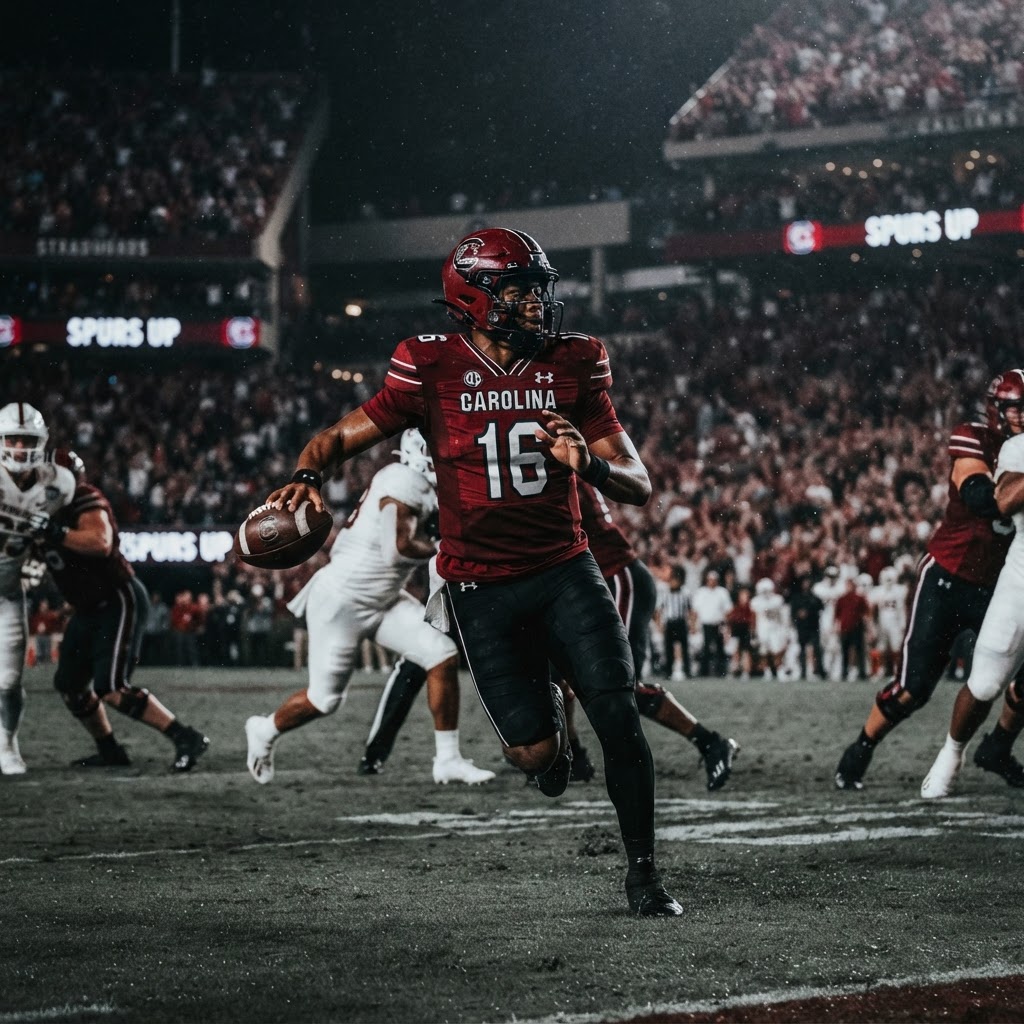
The humid air of Columbia usually vibrates with the frantic energy of 80,000 souls, but the recent defeat to Towson cast an uncharacteristic shroud over the newly renovated concrete of Williams-Brice Stadium. As the clock hit zero on September 12, 2026, the silence was deafening, a stark departure from the legendary nights that defined South Carolina lore. In the 2026 season, the standard has not just been set; it has been demanded, and the current reality has left the Gamecock faithful searching for the spark that once made this venue the most intimidating gauntlet in the SEC.
A Catalyst for Growth
Shane Beamer has always understood the gravity of his position, taking the reins back in December 2020 with a mandate to restore pride. The arrival of new offensive coordinator Kendal Briles in December 2025 was meant to inject a high-octane philosophy into this attack, yet the transition remains a work in progress. When the offense struggles to find rhythm, it falls on the shoulders of the signal-caller to bridge the gap between schematic brilliance and execution. LaNorris Sellers, the undisputed leader of this group, understands that the maturation of a quarterback is rarely linear, even when the pressure from the stands is at an all-time high.
The Analytical Lens
The essence of a championship team is found in its capacity to absorb failure and transmute it into discipline, for talent provides the ceiling, but internal accountability defines the floor of any elite program.
The Road Back to Form
With a foundation anchored by veterans like Nyck Harbor and Dylan Stewart, the defensive and offensive cores possess the requisite experience to rectify recent inconsistencies. Defensive coordinator Torrian Gray continues to emphasize a brand of toughness that is the hallmark of Gamecock culture, even as the team recalibrates following the Towson result. The offense, directed by Briles and led by the trio of Sellers, Lucian Anderson III, and Cutter Woods, is in a critical phase of identity formation. Turning the page requires more than just scheme changes; it demands a psychological reset that reflects the storied history of this program.
Forging the Future
As the Gamecocks move forward in the 2026 season, the focus shifts to resilience. The renovations to the stadium provide a modern stage, but the performance upon that stage belongs to the players. By revisiting the grit that characterized successful eras of the past, Beamer’s squad has the opportunity to transform a difficult September loss into the catalyst for a season-defining turnaround. The path ahead is rigorous, but the potential for redemption remains firmly in their hands.
Published about 1 month ago
Staff
Staff writer for SEC Saturday Wire covering college sports.
Process Notes & Methodology
The angle centers on the struggle of the current team to live up to the historical legacy of the Gamecocks after a recent loss to Towson. It emphasizes coaching stability and player development as the bridge between past successes and future potential.
I utilized the vivid imagery of the silent post-game stadium to anchor the narrative in the recent disappointing loss to Towson, establishing a heavy, reflective tone.
The body content integrates the coaching staff changes (Beamer and Briles), the specific quarterback room dynamics, and the presence of veteran leaders like Nyck Harbor and Dylan Stewart to illustrate the team's current state.
The closing pivot looks forward by framing the upcoming games as an opportunity for the team to use the recent loss as a catalyst, emphasizing resilience and the 'Gamecock culture'.
See something wrong? Fix it.
We're the first crowdsourced college football site. Submit corrections — our editors review every one.