Depth Chart Thursday: John Mateer Leading the Charge for Sooners in Spring Ball & Recruiting 2026
As the calendar hits late July, Brent Venables looks to solidify his roster during a high-stakes off-season.

As we navigate through the Spring Ball & Recruiting 2026 window, the Oklahoma Sooners find themselves at a pivotal juncture. Under head coach Brent Venables, the primary focus this summer is refining the offensive identity and solidifying the depth chart ahead of a grueling upcoming schedule.
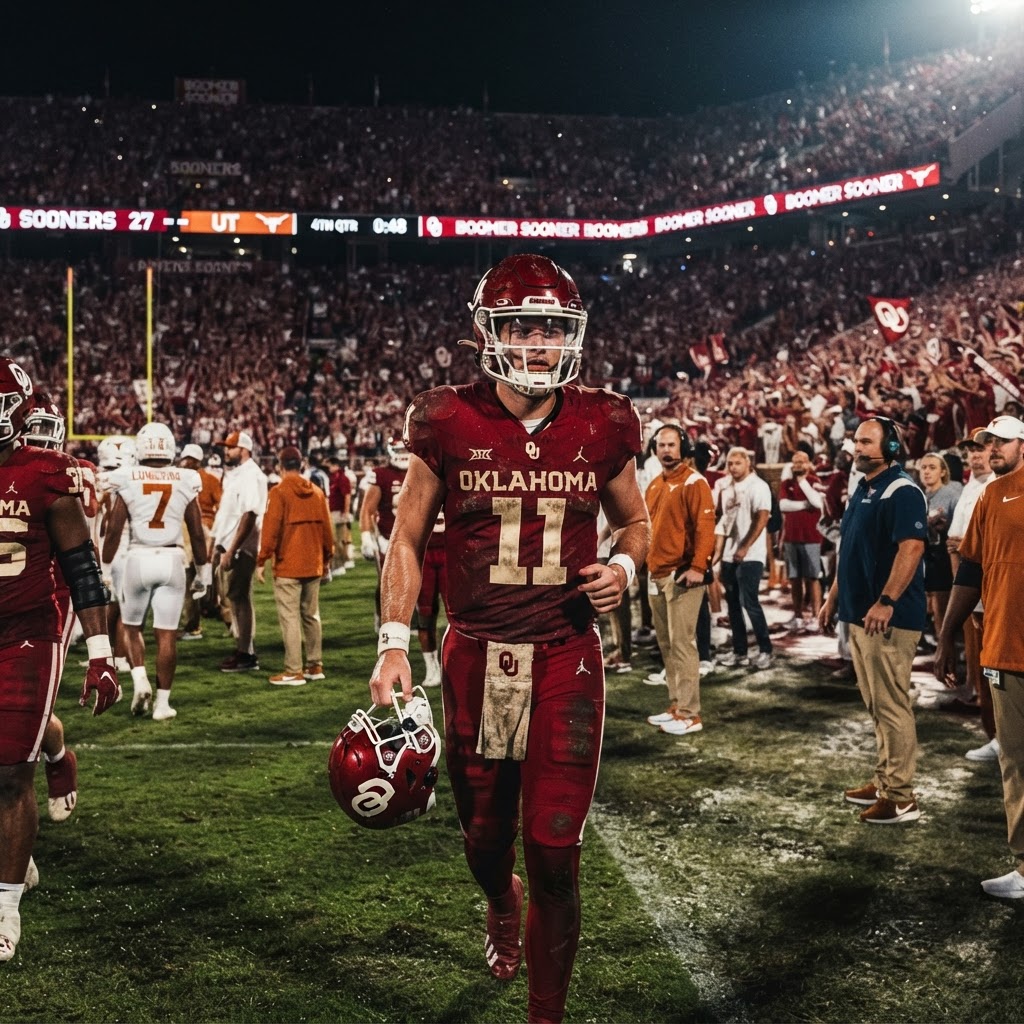
At the center of this evolution is quarterback John Mateer. Entering his second season with the program, Mateer is looking to take a significant step forward in accuracy after a 2025 campaign that was notably hindered by a thumb injury. With a robust list of new arrivals—including names like Trell Harris and Hayden Hansen—the coaching staff is working to integrate fresh talent into the system while relying on a core of returning starters like David Stone and Jayden Jackson to anchor the defensive front.
The offensive staff, led by coordinator Ben Arbuckle, is specifically tasked with establishing a more consistent ground game. Given the challenging 2026 slate, which features daunting road trips to face Michigan, Georgia, Mississippi State, and Florida, these summer workouts are critical for determining who will provide the necessary depth to survive the season.
Published 3 months ago
Staff
Staff writer for SEC Saturday Wire covering college sports.
Process Notes & Methodology
The angle focuses on the internal evolution of the team under Brent Venables, specifically how John Mateer's recovery and development drive the offensive narrative. It connects individual player growth to the broader requirement of building a reliable depth chart for a tough 2026 schedule.
The hook establishes the current timeline of Spring Ball & Recruiting 2026 and sets the stage for the depth chart analysis by centering the team under head coach Brent Venables.
The body content integrates the status of John Mateer's recovery from his 2025 injury with the need to establish a consistent running game. It also acknowledges the influx of new transfer talent and the leadership of returning defensive starters to illustrate the current state of the roster.
The conclusion pivots to the upcoming 2026 schedule to emphasize why these specific position battles and the integration of new players are essential for the team's future success.
See something wrong? Fix it.
We're the first crowdsourced college football site. Submit corrections — our editors review every one.