The No. 1 Problem: Texas, Georgia, and an SEC That Can't Agree on Itself
The Longhorns carry the conference's only top ranking into the Red River Rivalry, but the debate over whether they've earned it is only getting louder

A Number One With an Asterisk Attached
Texas is No. 1. That is not in dispute — it is printed, official, and sitting atop the rankings as the Longhorns prepare to cross into Dallas for the Red River Rivalry against Oklahoma in Week 6. What is in dispute, loudly and from nearly every corner of the sport, is whether that ranking reflects reality or simply reflects the chaos of a college football season that has already chewed through its preseason assumptions.
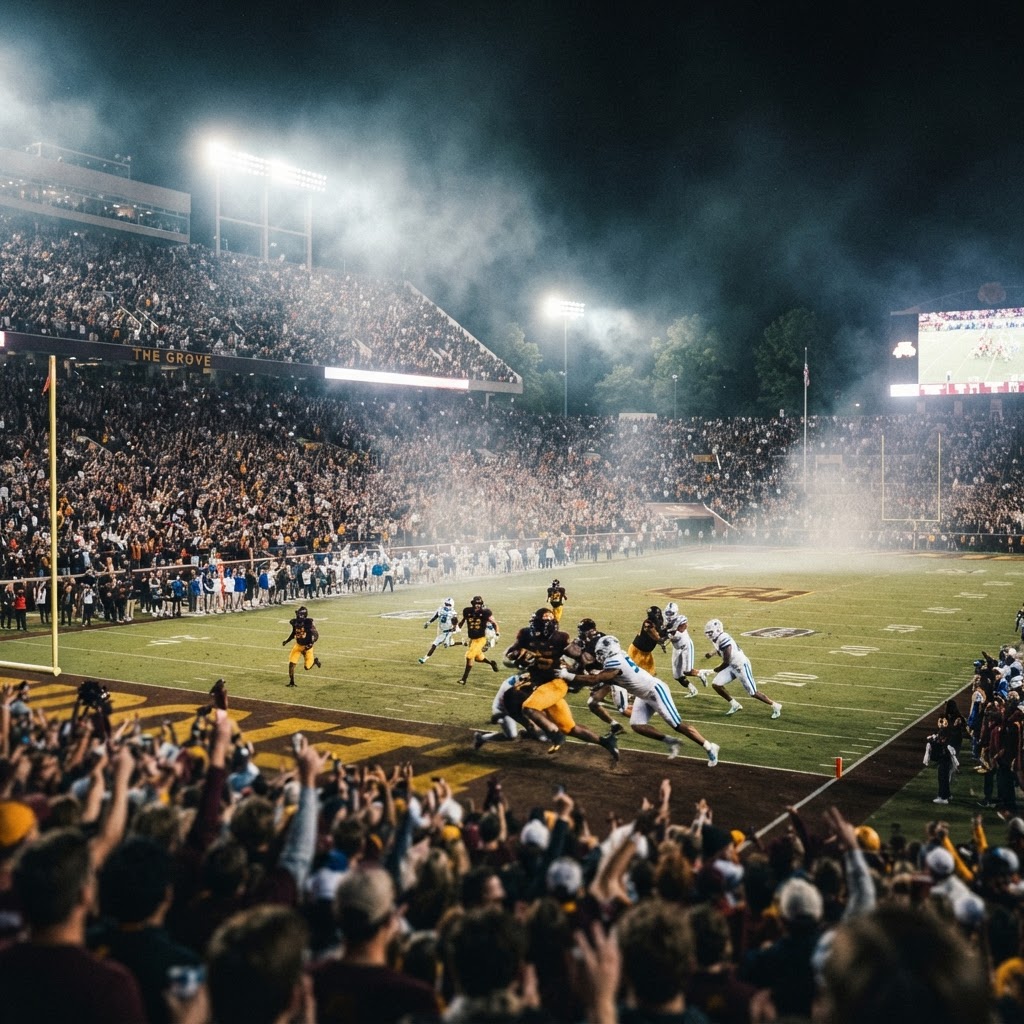
This is not a quiet debate happening in message-board corners. SEC Network is sending its pregame show, SEC Nation, to Dallas for the Cotton Bowl matchup — a signal that the network itself understands this game is the week's signature event, No. 1 ranking and all. But the broadcast spotlight does not settle the argument; if anything, it amplifies it. Every camera pointed at Texas this week is also, implicitly, pointed at Georgia, the team most analysts still believe is the conference's — and perhaps the nation's — best.
So the question hanging over Red River week is not really about Oklahoma. It's about whether Texas belongs at the top of the sport, whether Georgia's preseason pedigree still means something in Week 6, and whether the SEC's hierarchy has actually changed or just gotten more confusing. None of those questions have clean answers. That's exactly why this is the story of the week.
What the Numbers Actually Say
Start with the plainest fact available: Texas is ranked No. 1 in the country entering this week. That's the baseline. But rankings in October are not verdicts — they're snapshots, and the snapshot from SEC Media Days in Tampa looked very different from the one in front of us now. At Media Days, Georgia was the media's preseason pick to win the SEC, collecting 88 of a possible 164 championship votes. Texas was the runner-up in that same preseason poll, drawing 57 first-place votes of its own — a healthy total, but one that still left Georgia as the clear favorite in the eyes of the people who cover the league for a living.
That gap matters now because it frames the current argument. Texas moving to No. 1 nationally while Georgia sits at No. 2 is not simply a changing of the guard that everyone has accepted. It's a reversal of what preseason voters believed, and reversals invite scrutiny. When 88 votes said Georgia and 57 said Texas, and the sport flips that order by October, the natural question is whether the shift is earned or whether it's a product of circumstance — scheduling luck, timing, the way results fell during a chaotic Week 5 around the sport.
That's where the power rankings industry comes in, and it's been busy. AL.com released an updated set of SEC Power Rankings on October 5, explicitly built around the shake-up that Week 5 upsets caused across the conference. A day later, SEC Network's own rankers — Dari Nowkhah, Alyssa Lang, Benjamin Watson, and Chris Doering — published their own updated take following that same week of play. The fact that two separate outlets felt compelled to re-rank the conference within 24 hours of each other tells you how unsettled the picture is. Nobody is treating the current order as fixed. They're treating it as fragile.
The Opponent Across the Field
Any argument about whether Texas deserves No. 1 has to eventually run through Oklahoma, because that's who's standing in front of the Longhorns this week. The Red River Rivalry carries its own gravity regardless of ranking — it's one of the sport's signature environments, played at a neutral site in Dallas with a history that predates either school's current conference affiliation. SEC Nation's decision to broadcast from the site only underscores how much weight the industry is putting on this specific Saturday.
But rivalry prestige and ranking justification are two different things. A No. 1 team beating a rival in a historic setting makes for great television; it doesn't automatically answer whether that No. 1 team is actually the best team in the country. That distinction is exactly what's fueling the Georgia side of the debate — the argument that Texas's ranking is being validated by the spectacle of Red River week rather than by a resume that's demonstrably superior to Georgia's.
Zoom out further and the schedule tells its own story. The SEC has already set up Texas's next marquee test: a trip to face No. 16 Florida on October 17, airing at 12:00 PM EDT on ABC or ESPN. That means the Longhorns don't get to simply beat Oklahoma and coast on the ranking — the conference has stacked a ranked opponent right behind this week's rivalry game. If Texas is going to answer the national debate with its play rather than its preseason pedigree, the Florida game is shaping up as the next real checkpoint, not Red River alone.
Georgia's Case Doesn't Disappear Just Because It's No. 2
Here's the part of the conversation that keeps resurfacing no matter how many times people try to settle it: Georgia being ranked No. 2 instead of No. 1 has done almost nothing to dampen the belief that Georgia is still the conference's most proven heavyweight. The ground-level fact is simple — national debate continues over Texas being tiered above a Georgia team that still carries consensus top-tier status among analysts. That's not a fringe opinion; it's a persistent, mainstream thread in how the sport is being discussed this week.
Part of that comes directly from the preseason math. Georgia didn't back into its preseason favorite status — it earned 88 of 164 championship votes at Media Days, more than half the electorate, making it the clear consensus pick before a single snap of the season was played. Texas's 57 votes were respectable, good enough for second, but second nonetheless. When the actual results start to diverge from that initial consensus, the instinct among a lot of analysts isn't to assume the preseason voters were wrong. It's to assume something temporary is happening — that Texas is riding a hot stretch while Georgia's underlying quality hasn't actually been surpassed.
That's the crux of the entire argument this week: is Texas's ranking a sign of genuine separation from the rest of the SEC, or is it a function of being undefeated at the right moment while Georgia's résumé simply hasn't had the opportunity to reassert itself? The AL.com and SEC Network power rankings released just this week suggest the debate is far from resolved internally among the people whose job it is to settle exactly these questions.
The Manning Variable
No conversation about Texas's ceiling is complete without Arch Manning, and his storyline this season has been built on a specific kind of validation — and a specific kind of snub. Manning closed out the 2025 season by leading Texas to a 7-1 finish, a stretch strong enough to carry real expectations into 2026, when he returned as the unquestioned centerpiece of Sarkisian's offense. That finish is the single clearest piece of on-field evidence behind Texas's preseason buzz and, by extension, its current No. 1 ranking.
And yet, even with that résumé, Manning didn't get the preseason recognition that might have been expected. He was edged out for preseason All-SEC first-team quarterback honors by Ole Miss's Trinidad Chambliss. That's a notable detail, because it means the same voting bodies shaping the conference's preseason expectations were not fully convinced Manning was even the best quarterback in the league, let alone the best player in the country. If Texas's case for No. 1 rests heavily on Manning as the engine of the offense, that snub is a data point the Georgia camp — and anyone skeptical of Texas's ranking — can point to directly.
This is where the Sarkisian angle becomes relevant too. A head coach's job in a moment like this isn't just to win Red River; it's to manage a team that is simultaneously the hunted No. 1 and a team that, by at least one meaningful preseason metric, didn't have the league's presumptive best quarterback. That's an unusual position to coach through — carrying the sport's top ranking while your most important player entered the year outside the first-team conversation at his own position.
How the Industry Is Reacting in Real Time
What makes this week different from a typical rivalry buildup is how actively the ranking infrastructure itself is reacting. AL.com didn't wait for Red River to reassess the conference — it published new SEC Power Rankings on October 5, explicitly framed around the shifts caused by Week 5 upsets. That's an industry acknowledging, in real time, that the order of the conference is moving under its feet.
Then came the SEC Network response just a day later: Dari Nowkhah, Alyssa Lang, Benjamin Watson, and Chris Doering each weighing in with updated rankings of their own on October 6, again built off that same Week 5 data. Four separate, credentialed voices from the conference's own broadcast partner recalibrating within 48 hours of a competitor's rankings is not a coincidence — it's a sign that the Texas-at-No. 1, Georgia-at-No. 2 question is one the industry feels obligated to keep re-litigating rather than settle once and declare finished.
And then there's the made-for-television element: SEC Nation setting up shop in Dallas for the Cotton Bowl is as close as the conference's broadcast arm comes to declaring a game the week's unofficial championship of attention. That doesn't resolve the Georgia argument. If anything, it raises the stakes on it — a loss by Texas in that spotlight would hand ammunition to every analyst already skeptical of the top ranking, while a win would do little to quiet Georgia's backers, who can simply point to the schedule still ahead.
What Happens Next Actually Matters More Than This Week
The uncomfortable truth for Texas is that beating Oklahoma, even in the sport's premier rivalry setting with SEC Nation in town, may not end the debate at all. The schedule has already built in the next test: No. 1 Texas travels to face No. 16 Florida on October 17, a noon kickoff on ABC or ESPN. That's a ranked opponent, set up by the conference itself, arriving just one week after Red River. If Texas wants its No. 1 ranking to stop being treated as provisional, that's the game where it has to prove it again.
Georgia, meanwhile, doesn't need to do anything dramatic to keep its case alive — it simply needs to keep existing as the preseason favorite that 88 of 164 media voters believed in before the season started. Every time Texas plays a game that isn't a blowout, or every time a power-rankings panel reshuffles the order, Georgia's name resurfaces as the alternative answer to the question of who's actually best in the SEC, let alone the country.
That dynamic isn't going away after Saturday. The AL.com and SEC Network rankings released this week prove that the analysts closest to the conference aren't ready to treat the current order as settled, and the Florida matchup on the 17th gives the whole debate another concrete data point in less than two weeks. Red River is a huge game. It is not, on its own, the deciding game.
The Bottom Line
Texas earns the right to call itself No. 1 every week it stays unbeaten, but a ranking built partly on a 7-1 finish to last season and a quarterback who didn't even make preseason All-SEC first team is a ranking that will keep inviting scrutiny — especially with Georgia, the team that actually won the preseason media vote 88-to-57, sitting one spot behind and refusing to go away. The fact that two separate ranking bodies felt the need to reshuffle the entire conference within 24 hours of each other this week is proof the argument isn't settled; it's just being re-asked on a tighter schedule.
Red River Rivalry week will generate the spectacle — SEC Nation in Dallas, the Cotton Bowl at full volume, a century-old rivalry doing what it always does. But the real verdict on Texas's No. 1 ranking won't come from beating Oklahoma. It'll come afterward, starting with No. 16 Florida on October 17, when the Longhorns either turn a contested ranking into a convincing one or hand the SEC hierarchy debate right back to Georgia.
Published 2 days ago
Staff
Staff writer for SEC Saturday Wire covering college sports.
Process Notes & Methodology
Frame the piece around a central tension rather than a recap: Texas is officially No.1, but the ranking is contested nationally against Georgia's preseason pedigree (88-57 vote split at Media Days). Use the SEC Nation Dallas broadcast, the dueling AL.com/SEC Network power-rankings releases, the Arch Manning preseason QB snub to Trinidad Chambliss, and the upcoming Florida game as the structural evidence for an argued, question-driven piece rather than a straight preview.
The lede sets up the paradox: Texas holds the No.1 ranking heading into Red River week, but that ranking is nationally disputed, with SEC Nation's move to Dallas used as evidence of the spotlight intensity without resolving the underlying debate about whether Texas or Georgia is truly the top team.
Each section interrogates one thread using only the provided facts: the preseason vote math (88 vs 57) as the numeric backbone of the debate; Oklahoma as a historic but ranking-agnostic rivalry test, paired with the looming No.16 Florida game as the real resume-building opponent; Georgia's enduring case as the consensus preseason favorite; Arch Manning's 7-1 finish to 2025 juxtaposed against being edged for preseason All-SEC QB by Trinidad Chambliss as the roster/coaching angle; the AL.com (Oct 5) and SEC Network ranker (Oct 6) re-rankings as evidence of unsettled industry consensus; and the Florida matchup as the 'what's next' checkpoint that will actually test the ranking.
The Bottom Line delivers a clear verdict: Texas's No.1 status is real but fragile and contested, resting on thin margins (the Manning QB snub, the preseason vote deficit to Georgia), and the true test of legitimacy will come after Red River, in the Florida game, rather than from the rivalry spectacle itself.
See something wrong? Fix it.
We're the first crowdsourced college football site. Submit corrections — our editors review every one.