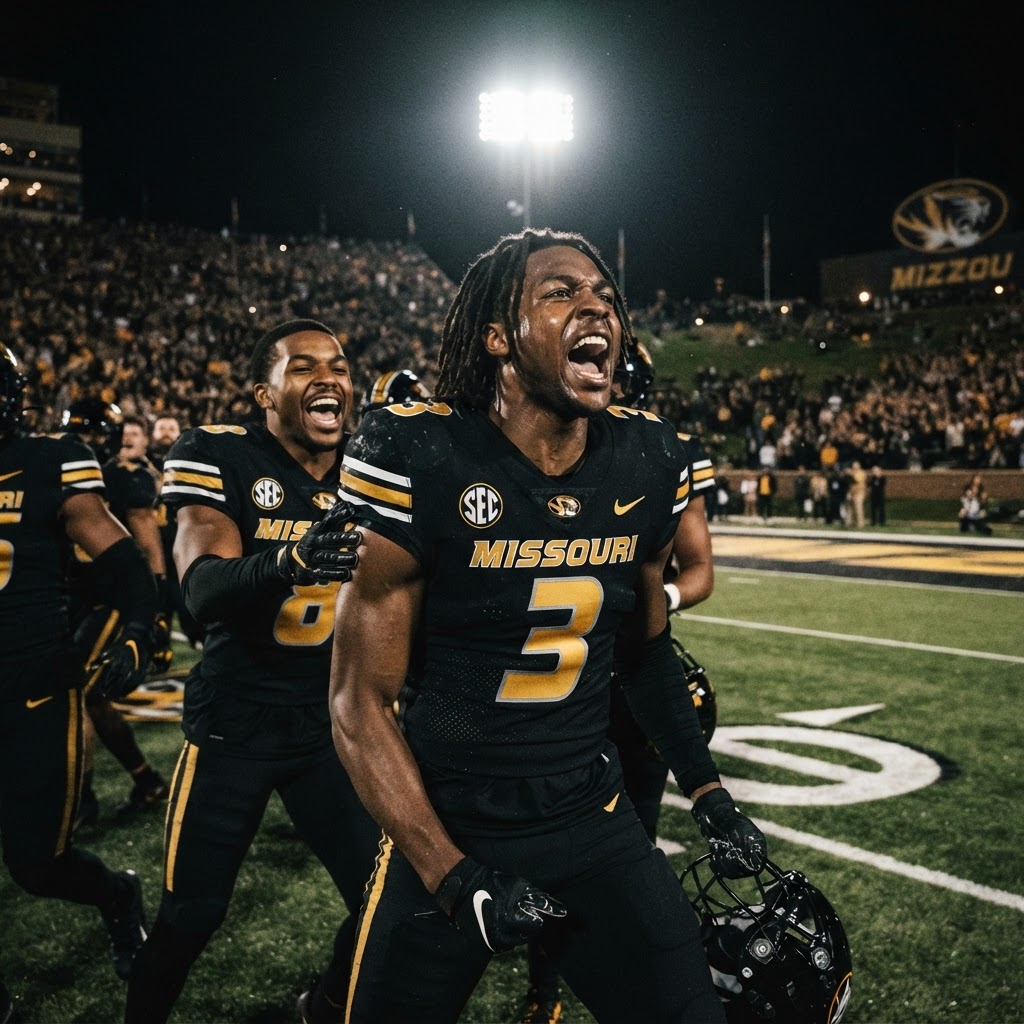
A Century in the Making: Missouri's High-Stakes Blueprint for a 2026 Resurgence
As Memorial Stadium undergoes a historic $250 million transformation, Eliah Drinkwitz engineers a massive roster reset, pinning the Tigers' SEC hopes on a new left-handed quarterback and a defense starting entirely from scratch.

The Architecture of a Hard Reset
Mid-July heat radiates off the fresh concrete of Memorial Stadium, where cranes loom over the North End Zone like steel sentinels guarding the future of Missouri Tigers football. The university is currently in the final 'punch-list' phase of the breathtaking $250 million Memorial Stadium Centennial Project. Construction crews are painstakingly laying down carpet installations and applying the final touches to premium suites, racing against the clock to ensure the gleaming 65,000-seat fortress is fully operational for the stadium's 100th-anniversary season. The physical rebuilding of the cathedral is magnificent. The metaphorical rebuilding of the team that will play inside it, however, is significantly more complicated.
Entering his pivotal seventh season in Columbia, head coach Eliah Drinkwitz finds his program standing at a critical juncture. Following a frustrating 8-5 conclusion to the 2025 campaign, Drinkwitz is orchestrating a massive, unprecedented "hard reset." The Southeastern Conference is an unforgiving landscape for teams in transition, a reality sharply reflected in the recent preseason SEC Media Days projections that placed Missouri an uninspiring 11th in the conference power rankings. For Drinkwitz, this season is no longer about maintaining the status quo; it is about proving that his grand architectural vision for the Tigers can withstand the immense structural weight of the modern SEC.
The Southpaw Savior Takes the Mic
The philosophical shift of Missouri's 2026 identity was broadcast loudly to the college football world on July 14, when the SEC officially released its attendee list for Media Days in Tampa. Stepping up to the podium as the face of the program will be newly minted starting quarterback Austin Simmons. Marking the first time a left-handed signal-caller has headlined Missouri’s media contingent since the early 2000s, Simmons’ presence in Tampa signifies the dawn of a radically altered offensive scheme.
Hired in January 2026 to resuscitate a unit that languished in the bottom third of the SEC last year, offensive coordinator Chip Lindsey wasted no time in identifying his field general. Following a fiercely competitive spring, Simmons—a high-profile transfer who began his career at Ole Miss—was officially awarded the starting job on June 28. The dual-sport standout outpaced a developing depth chart that features Nick Evers and highly touted freshman Matt Zollers. Under intense scrutiny, Simmons brings an intoxicating blend of elite arm talent and athletic upside that has already fueled preseason optimism among local beat reporters. His ability to navigate Lindsey's aggressive, downfield-oriented playbook will ultimately dictate the ceiling of the entire team.
To ensure Simmons isn't fighting a lone battle, the coaching staff aggressively mined the transfer portal for SEC-ready perimeter weapons. High-profile transfer wide receiver Cayden Lee arrived in April, instantly injecting breakaway speed into a wideout room desperate for a proven deep threat. Up front, the staff successfully secured returning anchors like Cayden Green and Brett Norfleet while integrating crucial additions to fortify the blindside protection.
A Backfield Shrouded in Uncertainty
Despite the aerial reinforcements, the traditional engine of the Missouri offense—its bruising ground game—is currently enveloped in a dark cloud of medical uncertainty. The status of consensus All-American running back Ahmad Hardy remains the most significant and sobering hurdle of the offseason.
Hardy was nothing short of spectacular in 2025, grinding out 1,649 rushing yards and cementing himself as one of the premier tailbacks in the nation. However, his dominant sophomore campaign was tragically overshadowed by a devastating offseason incident. Hardy is currently rehabilitating from a gunshot wound sustained in May. Head coach Eliah Drinkwitz recently provided a tempered, heavily monitored update on his superstar's condition. While Hardy’s spirits remain incredibly high—evidenced by his dedicated attendance at early morning team sessions—he has not yet been cleared to resume full weight-bearing activities. The medical staff is employing a strict 'wait-and-see' approach regarding his availability for the first half of the season.
In Hardy’s absence, Jamal Roberts has seamlessly elevated into the presumptive RB1 role. Roberts, a trusted returning veteran, will be tasked with carrying the load when the Tigers kick off their season on September 3 against Arkansas-Pine Bluff. His ability to shoulder the primary rushing duties will be critical in preventing opposing defenses from pinning their ears back and overwhelming Simmons in the pocket.
A Defensive Tabula Rasa
If the offense is undergoing a major renovation, the defense has been subjected to a complete demolition. Defensive coordinator Corey Batoon, entering his second full year, faces what is undeniably the steepest foundational climb in modern SEC history. The offseason exacted a heavy toll on the defensive depth chart, with stalwarts like Daylan Carnell, Dreyden Norwood, and Triston Newson departing for the NFL or the portal.
In the modern era of the transfer portal, roster turnover is an accepted reality of college football. But what defensive coordinator Corey Batoon faces in Columbia is something altogether unprecedented. The Tigers stand as the only team in the Power 4 to return zero starters on the defensive side of the ball for the 2026 campaign, transforming immediate portal integration from a luxury into a sheer survival tactic.
Faced with a completely blank slate of an eleven, Batoon and his staff spent the spring aggressively acquiring veteran stopgaps to provide immediate stability. The influx of defensive talent features a wave of seasoned transfers, including Jahlil Florence, JaDon Blair, Robert Woodyard Jr., and Malik Bryant. Batoon’s scheme demands high football IQ and relentless pursuit, and the sheer volume of new faces requires a masterclass in accelerated team-building. Integrating a dozen disparate pieces into a cohesive, SEC-caliber unit in a matter of months will be the defining coaching achievement of Batoon's career—if he can pull it off.
The Price Tag of the Arms Race
Compounding the complexity of this two-deep integration is the program's stark lack of public evaluation. Because Memorial Stadium is consumed by the $250 million Centennial Project, the highly anticipated 2026 Black and Gold Spring Game was outright canceled. As a result, Batoon, Lindsey, and Drinkwitz have relied exclusively on closed-door, internal development to build vital chemistry.
This aggressive institutional investment, however, comes with harsh financial realities. While the spectacular new North End Zone prepares to open its doors, the athletic department is quietly maneuvering to address a projected $9.1 million budget deficit for the 2025-26 fiscal year. To mitigate the shortfall, the university is actively exploring corporate naming rights for Memorial Stadium—a deeply polarizing initiative that has sparked fierce contention among traditionalist alumni. The tension between preserving a century of history and funding the relentless arms race of the modern SEC has never been more palpable in Columbia.
Recruiting Momentum in the Shadows
Yet, despite the financial tightrope and the unprecedented roster volatility, there is undeniable, surging momentum off the field. Drinkwitz’s recruiting machine refuses to stall. The Tigers’ 2026 recruiting class is currently comfortably entrenched inside the top 20 nationally, boasting 14 hard verbal commitments. The latest triumph arrived on July 1, when explosive wide receiver Tre Britton officially committed to Missouri, turning down aggressive overtures from powerhouse programs like Michigan and Miami. Britton joins a highly touted offensive pipeline that already features elite 2027 quarterback prospect Braylen Warren, signaling that elite talent continues to buy into Drinkwitz's long-term vision.
As July bleeds into August and the dust finally begins to settle over the pristine new suites of Memorial Stadium, the Missouri Tigers stand at the threshold of a defining era. With a left-handed gunslinger at the helm, a defense built entirely from scratch, and the ghosts of a century watching from the stands, the 2026 season will test the very foundation of Eliah Drinkwitz's tenure. Whether this massive hard reset results in a triumphant march up the SEC standings or a painful lesson in transition, one thing is certain: there will be no looking back.
Published 3 months ago
Staff
Staff writer for SEC Saturday Wire covering college sports.
Process Notes & Methodology
The article focuses on the theme of 'transition' as the defining narrative for Missouri in 2026. It balances the challenges of staff changes and roster turnover with the strategic goals for the upcoming season.
The intro anchors the piece in the current date of the Spring Ball & Recruiting 2026 calendar while identifying Eli Drinkwitz as the central figure navigating the team's challenges.
The body content integrates the new coaching staff (Chip Lindsey, Corey Batoon) with the specific personnel situation at quarterback (Austin Simmons). It also addresses the defensive rebuild and the recovery status of Ahmad Hardy to explain the current state of the roster.
The conclusion points toward the impact of the lack of a spring game and the ongoing work required by the staff as the Tigers prepare for the future.
See something wrong? Fix it.
We're the first crowdsourced college football site. Submit corrections — our editors review every one.