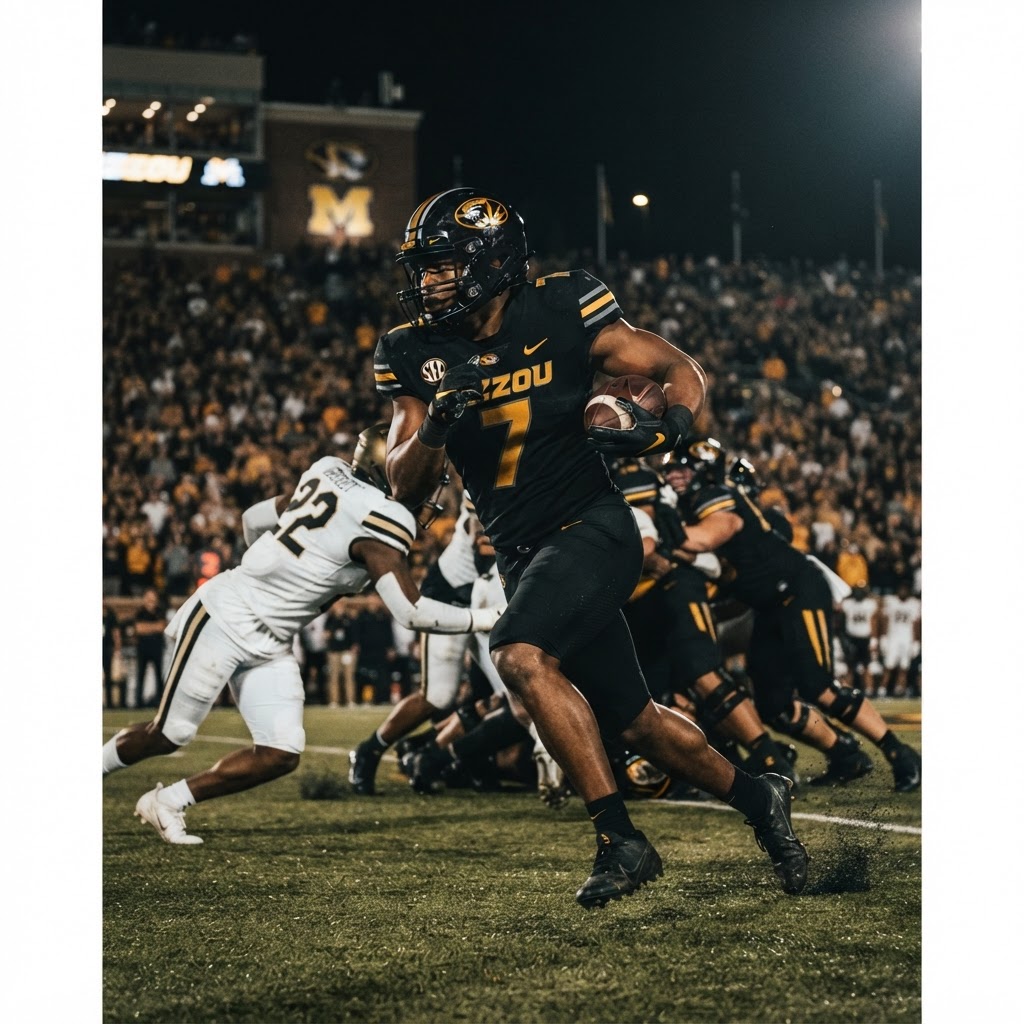
The $250 Million Metaphor: Eliah Drinkwitz's Total Roster Reset and the Dawn of a New Missouri Era
With a completely revamped defense, a dynamic new vertical offense, and an overhauled Memorial Stadium, the Tigers are embracing extreme transformation heading into the 2026 season.

A Cathedral Transformed
In the sweltering mid-July heat of Columbia, Missouri, the persistent rumble of heavy machinery echoes through the historic bones of Memorial Stadium. The ambitious, $250 million 'Beyond 100' Centennial Project is currently entering its final, meticulous phase. Construction crews are feverishly working through the extensive punch list, laying down miles of fresh premium carpet and finalizing the intricate, artisan stonework that will ultimately define the exclusive 'Rock M Club.' When the dust finally settles and the gleaming, bowl-shaped facility makes its grand debut for the September 3 season opener against Arkansas-Pine Bluff, the physical structure will be virtually unrecognizable to those who knew its previous iterations. It is a stunning architectural evolution, but more importantly, it serves as the perfect, towering metaphor for the football program housed within its walls. Entering his seventh season at the helm, head coach Eliah Drinkwitz is navigating what can only be described as a total programmatic reset. Following a solid but undeniably transitional 8-5 campaign in 2025, the Missouri Tigers have spent the offseason aggressively pivoting away from the veteran-heavy core of their recent past. With the stadium renovations shutting down public access and preventing a traditional spring game, much of this radical transformation has occurred entirely behind closed doors, hidden from the prying eyes of the Southeastern Conference. Yet, as the calendar turns toward late July, the veil is beginning to lift, revealing a roster defined by high-tempo urgency, breathtaking athleticism, and profound, lingering questions.
The Heartbeat and the Heartbreak
The dawn of any new era is rarely without its shadows, and for Missouri, the 2026 offseason has been marked by a deeply sobering reality. The most critical storyline looming over the team is the health and future of All-American running back Ahmad Hardy. After a spectacular 2025 campaign where he eviscerated SEC defenses to the tune of a conference-best 1,649 rushing yards, Hardy suffered a tragic gunshot wound in May 2026. While Coach Drinkwitz has provided reassuring updates confirming that the star tailback is recovering remarkably well, his availability for the upcoming season remains completely undefined. This devastating blow to the locker room has forced a rapid acceleration of internal leadership. As the team prepares for the glaring spotlight of SEC Media Days in Tampa, Florida, on July 20, Drinkwitz has officially appointed offensive lineman Cayden Green, linebacker Nicholas Rodriguez, and running back Jamal Roberts as the player representatives. The selection of Roberts is particularly profound. Thrust into the primary leadership void left by Hardy's absence, Roberts is now tasked with carrying both the emotional and physical weight of the Missouri rushing attack. His presence in Tampa will signal a unified front, showcasing a resilient backfield ready to shoulder the immense burden of an unforgiving SEC slate.
Simmons Takes the Reins
While the ground game searches for stability, the aerial attack has found its definitive general. The undisputed headline of the grueling spring period was the crowning of Austin Simmons as the undisputed QB1. The highly coveted Ole Miss transfer arrived in Columbia with a massive chip on his shoulder and successfully warded off intense, daily challenges from highly-touted sophomore prospect Matt Zollers and veteran portal addition Nick Evers. Simmons did not simply inherit the starting job; he aggressively seized it through a sheer display of undeniable arm talent and elite pocket mobility. He will now be tasked with piloting a thoroughly modernized offensive attack engineered by newly hired Offensive Coordinator Chip Lindsey and Quarterbacks Coach Garrett Riley, both brought aboard to revolutionize the Tigers' scoring capabilities. Moving decisively away from the more conservative, methodical philosophies of the recent past, Lindsey and Riley are currently installing a highly dynamic, RPO-heavy system specifically tailored to maximize their new quarterback's unique athletic profile. Internal reports from closed summer conditioning sessions paint a picture of a high-octane offense that places a renewed, almost aggressive emphasis on verticality. By stretching defenses horizontally with the run-pass option and vertically with Simmons' exceptional deep-ball accuracy, Missouri aims to force opposing safeties into impossible schematic conflicts.
A Defensive Erasure and Rebirth
For all the sky-high optimism surrounding the new offensive installation, the defensive side of the ball remains the program's most glaring and terrifying question mark. In a staggering, unprecedented reality for any modern SEC program with championship aspirations, the Tigers must replace all eleven starters from their 2025 defensive unit. This massive talent and experience drain forced the coaching staff into an incredibly aggressive posture during the April transfer portal window, where their focus remained strictly confined to acquiring immediate, plug-and-play production. Defensive Coordinator Corey Batoon has been tasked with the monumental challenge of weaving together seasoned SEC and Big 12 defensive line transfers with a highly athletic, incredibly green secondary.
While the ceiling of Missouri's new-look offense is sky-high, the ultimate trajectory of their 2026 season hinges entirely on how fast a completely reconstructed defense can learn to play as a cohesive unit against the most unforgiving schedules in college football.
Despite the lack of returning starting experience, the raw athletic materials at Batoon's disposal are legitimately terrifying. Summer conditioning has unveiled physical anomalies that suggest the defense could rely on sheer athleticism while their schematic understanding catches up. Safety Santana Banner has emerged as the premier standout of the offseason, reportedly clocking a blazing 4.39-second 40-yard dash while carrying a massive 230-pound frame. That rare combination of linebacker size and elite cornerback speed provides the defense with a versatile chess piece capable of neutralizing modern SEC tight ends and slot receivers alike. Similarly, edge rusher Daeden Hopkins has been a terror in pursuit, prompting Drinkwitz to recently tout him publicly as a future first-round NFL Draft pick. The talent is unquestionably present, but cultivating the veteran communication required to survive pre-snap motions and tempo offenses must happen overnight.
Securing the State's Future
Beyond stabilizing the chaotic reality of the current 120-man roster, Drinkwitz and his staff are actively prioritizing the distant horizon with a fierce, uncompromising mandate: closing the borders. Recruiting is the ultimate lifeblood of SEC survival, and the coaching staff is relentlessly focused on retaining elite, top-five in-state prospects, continuously mining the talent-rich athletic hubs of St. Louis and Kansas City. This hyper-local strategy is already paying massive dividends. As of mid-July, the Tigers currently boast 19 hard verbal commitments for the 2027 recruiting cycle, elevating the class to an impressive 27th national ranking. This momentum was recently highlighted by the July 1 pledge of dynamic three-star wide receiver Charles 'Tre' Britton III, and the staff remains a prominent finalist for highly coveted four-star running back Landen Williams-Callis. The message emanating from the Columbia football facility is abundantly clear: Missouri is building a sustainable, homegrown powerhouse that no longer serves as a feeder system for rival blue-bloods.
Embracing the Great Unknown
Preseason SEC media projections currently place the Missouri Tigers squarely in the murky middle of the conference pack, citing incredibly valid, mathematical concerns over their extreme lack of returning defensive experience. Yet, those same critical analysts are simultaneously praising the undeniable upside of the Lindsey-Simmons offensive marriage. It is a team of absolute extremes—a roster possessing the firepower to outscore anyone in the league, paired with a defense that is entirely unproven under live fire. As the final carpets are unrolled in the luxurious suites of Memorial Stadium and the grueling heat of fall camp approaches, Eliah Drinkwitz stands at the precipice of his most fascinating season to date. When the newly renovated stadium gates finally open in September, they will welcome a fan base that is hungry, a roster that is unburdened by past expectations, and a football program that is positioning itself for a thrilling, wildly unpredictable new era.
Published 3 months ago
Staff
Staff writer for SEC Saturday Wire covering college sports.
Process Notes & Methodology
The article focuses on the narrative of transition for the Missouri program. I chose to highlight the coaching changes and the specific roster overhaul, as these are the defining characteristics of their current offseason phase.
The introduction uses the current Spring Ball & Recruiting 2026 window to set the stage for Head Coach Eliah Drinkwitz's rebuilding efforts. It anchors the piece on the team's transition from their 2025 campaign.
The body content integrates the arrival of offensive coordinator Chip Lindsey and the official naming of Austin Simmons as QB1. It specifically notes the lack of a spring game due to stadium renovations to manage expectations around the theme while keeping the focus on roster changes.
The conclusion looks forward to the completion of the stadium renovations and the start of the 2026 season. It frames the current development phase as a necessary step toward the upcoming schedule.
See something wrong? Fix it.
We're the first crowdsourced college football site. Submit corrections — our editors review every one.