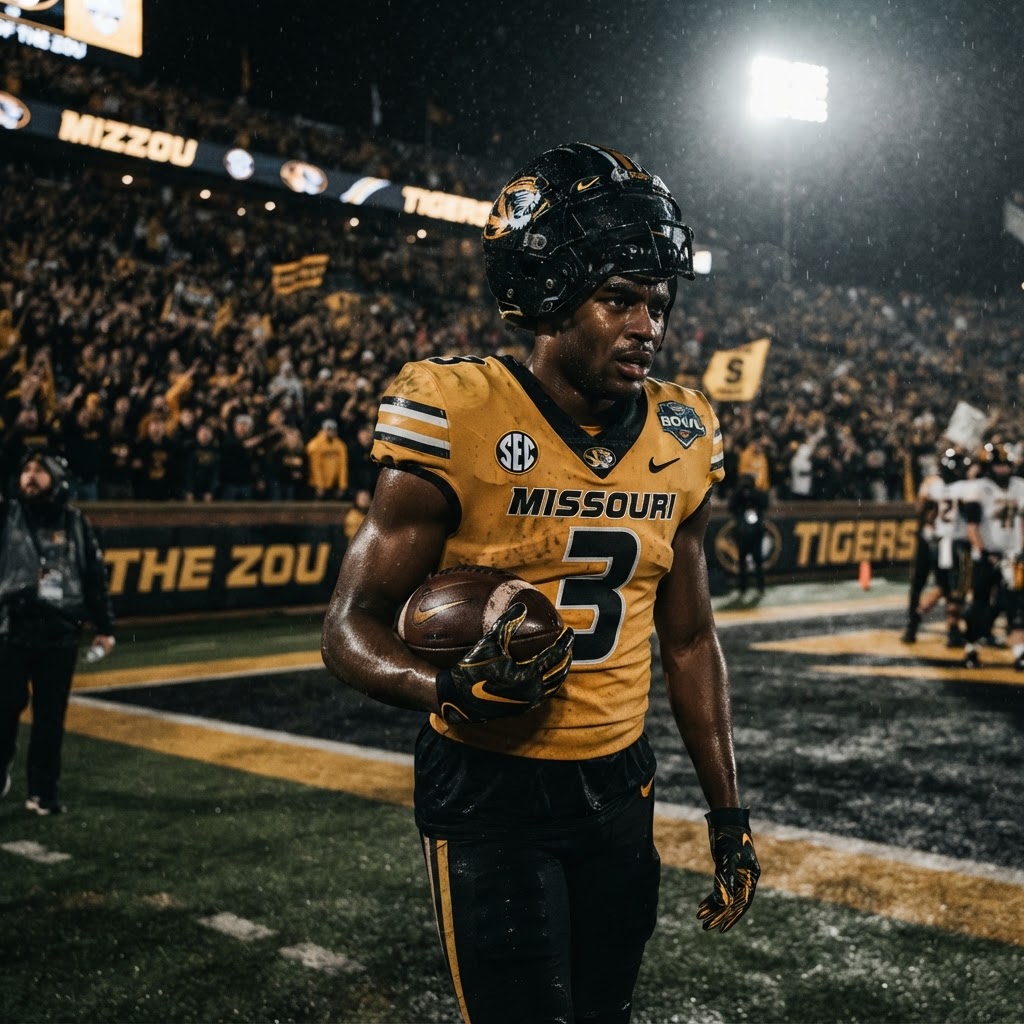
Momentum Monday: Drinkwitz, Simmons Give Missouri a Steady Hand Heading Into the Summer Grind
Spring ball is in the rearview and the Tigers' quarterback situation is settled — now the real work begins in Columbia.

There's a certain comfort in stability, and right now, Eli Drinkwitz has built exactly that in Columbia. As the calendar flips into July and the Southeastern Conference's summer recruiting cycle heats up, the Missouri Tigers find themselves in an enviable position: a head coach entering his seventh season at the helm, a settled quarterback room, and a spring practice session that — while not culminating in a publicly detailed spring game — gave the staff what it needed to evaluate and build toward fall camp.
Momentum, in the modern college football landscape, is a fragile thing. But the foundation Drinkwitz has laid since taking over on December 9, 2019, continues to bear fruit in ways that matter beyond the box score. The Tigers aren't scrambling for answers at the most important position on the field. They aren't introducing a new offensive philosophy. They aren't turning over the defensive coordinator's office. That kind of continuity is a competitive advantage in the SEC, and it's the engine behind whatever momentum Missouri carries into the heart of the summer.
Austin Simmons Anchors the Offense
Let's start where every SEC conversation should start: the quarterback. Austin Simmons enters the summer as Missouri's QB1, and that's not a placeholder designation. Simmons sits atop a depth chart that also includes Nick Evers and Matt Zollers, giving the Tigers three arms capable of running Chip Lindsey's offense. The Simmons-to-Evers-to-Zollers pecking order coming out of spring is the kind of clarity that lets an offensive coordinator build rather than experiment.
Lindsey, now settled into his role, had the benefit of a full spring — practices concluded in March 2026 — to work with all three quarterbacks. No formal spring game was publicly detailed beyond the close of the practice schedule, which means the evaluation work happened behind closed doors. That's not a negative; if anything, it allowed the staff to focus on development and installation without the performative lens of a televised scrimmage. What emerged was a depth chart that provides Simmons with the reins and the coaching staff with confidence.
Defensive Continuity Under Corey Batoon
On the other side of the ball, defensive coordinator Corey Batoon represents the same kind of program stability that defines Drinkwitz's Missouri tenure. When a defensive coordinator returns for another cycle, the terminology sticks, the expectations stick, and the players who've been in the system can teach the ones who are just arriving. That institutional knowledge compounds over the summer months, when players are largely on their own to run workouts and retain the mental reps from spring.
Batoon's defense will be a storyline to watch as fall camp approaches, but the fact that there's no coaching transition to manage is itself a form of momentum. Missouri isn't spending July installing a new scheme. They're refining an existing one.
The Summer Pivot
This is the stretch where seasons are quietly won. Spring ball ended in March. Fall camp is weeks away. In between, the strength program runs, the players take ownership of the locker room, and the recruiting trail consumes the coaching staff's attention. For Drinkwitz, who has proven he can recruit and develop within the SEC's grind, the Summer of 2026 is about maintaining the standard.
The quarterback situation is set. The coordinators are in place. The spring evaluation period is complete. Now it's about carrying that organizational momentum through July and into August, when the Tigers will transition from building to preparing. For a program that has found its footing under Drinkwitz, the pieces are in position — and in the SEC, that's half the battle.
Published 4 months ago
Staff
Staff writer for SEC Saturday Wire covering college sports.
Process Notes & Methodology
I chose to frame Missouri's momentum around organizational stability — Drinkwitz's tenure, settled coordinators, and a defined QB depth chart — because that continuity is the most compelling 'momentum' angle available from the verified context heading into the summer recruiting stretch.
The hook leans on Drinkwitz's start date (December 9, 2019) and the transition from spring ball into July, anchoring the reader in the fact that spring practices concluded in March 2026 without a publicly detailed spring game.
The body builds around the QB depth chart (Simmons, Evers, Zollers), offensive coordinator Chip Lindsey, and defensive coordinator Corey Batoon — using each as evidence of the program's continuity and summer positioning.
The closing pivots to the summer-to-fall transition, framing July as the bridge period where Drinkwitz's program maintains its standard before camp opens, setting up future fall camp storylines without inventing specifics.
See something wrong? Fix it.
We're the first crowdsourced college football site. Submit corrections — our editors review every one.