A New Chapter in the Bayou: Lane Kiffin’s LSU Transformation
As October dawns in the 2026 season, the Tigers are finding their identity under a new regime and the guidance of a familiar, gravel-voiced legend.

The Atmosphere of Change
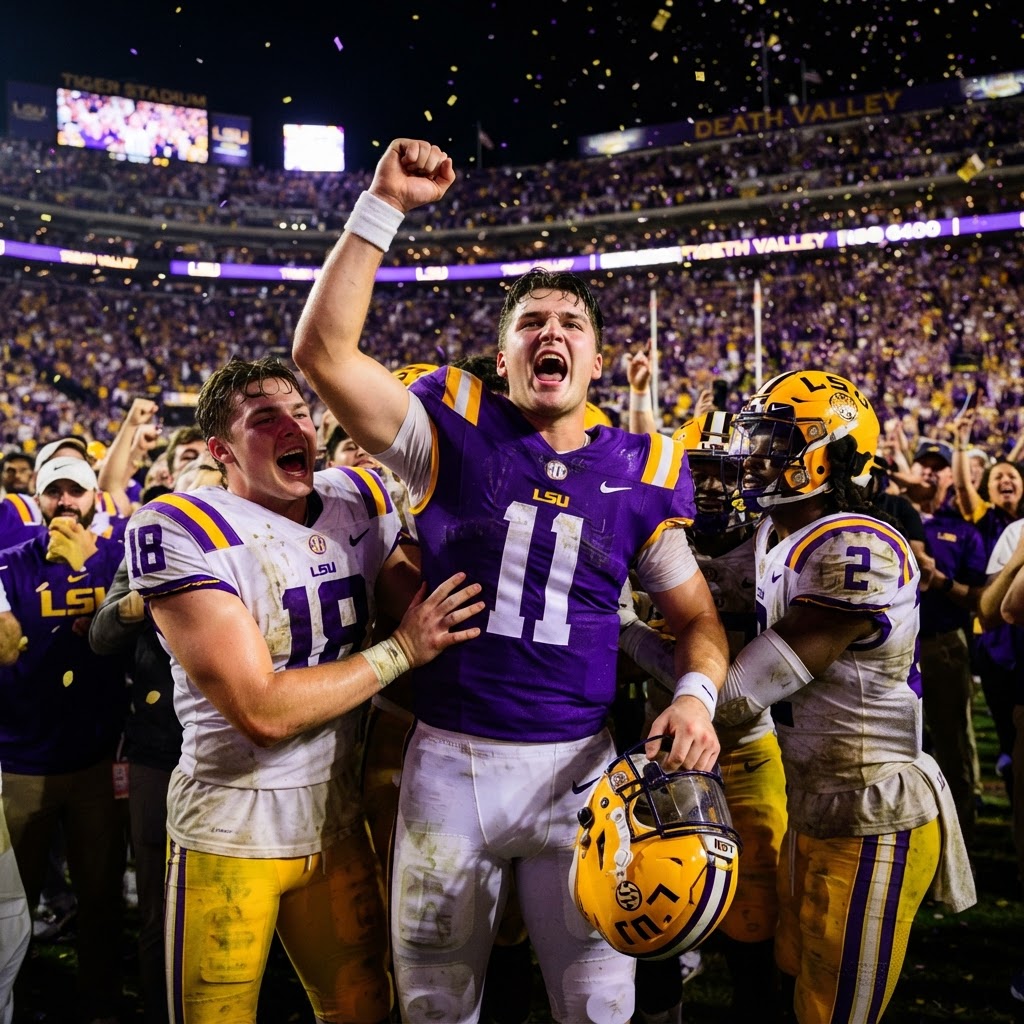
The air in Baton Rouge carries a different weight this October. As the 2026 season settles into its rhythm, Tiger Stadium feels like a cauldron of transition. With Lane Kiffin now at the helm, the program is moving with a velocity that suggests the page has been turned decisively from the uncertainty of late 2025. The transition began with a spotlight-stealing opener against Clemson, setting the tone for a team looking to redefine its identity in the modern landscape of college football.
The Kiffin Blueprint
Lane Kiffin’s arrival on November 30, 2025, sparked an immediate organizational reset. Under his direction, the focus has shifted toward a sophisticated approach to NIL management, aggressive portal evaluation, and a recruiting apparatus designed for the high-stakes world of modern athletics. Alongside offensive coordinator Charlie Weis Jr., Kiffin is tasked with maximizing the tools at his disposal to ensure the Tigers remain a formidable force in the SEC.
The Field General
At the center of this offensive evolution stands Sam Leavitt. As the primary signal-caller for the 2026 season, Leavitt is the engine of a scheme that demands both precision and patience. He is not merely managing the game; he is learning the nuances of Kiffin’s high-octane playbook, aiming to establish a consistency that will define LSU’s ceiling as the campaign progresses deep into the autumn schedule.
A Legacy Returns to the Ranks
Perhaps the most fascinating element of the 2026 season is the return of Ed Orgeron. Serving as a special assistant to recruiting and defense, his presence acts as a bridge between the program's storied past and its current administrative overhaul. Working alongside defensive coordinator Blake Baker, Orgeron’s input provides a layer of cultural continuity that helps ground the high-modernization efforts spearheaded by the coaching staff.
The Strategic Horizon
The philosophy is simple: Adapt or fall behind in the race for talent. By blending the strategic acumen of Kiffin with the boots-on-the-ground experience of a revamped staff, LSU is methodically building a roster capable of navigating the SEC's gauntlet. The true measure of this team will not be found in any single Saturday, but in the cumulative growth of their newfound identity as the winter months approach.
The true power of a program lies not in the plays drawn on a whiteboard, but in the alignment between a visionary staff and the relentless pursuit of individual excellence.
As the season continues, the synergy between the coaching brain trust and the players on the field will determine if the Tigers can reclaim their seat at the table. Every practice and every conference clash serves as a crucible, forging a team that aims to be more than just the sum of its parts by the time the postseason arrives.
Published 2 days ago
Staff
Staff writer for SEC Saturday Wire covering college sports.
Process Notes & Methodology
The angle focuses on the 'organizational reset' under Lane Kiffin, positioning his arrival as the catalyst for a modern era at LSU. I chose this to highlight the contrast between the new coaching staff and the return of Ed Orgeron as a cultural anchor.
The opening scene uses the atmosphere of the 2026 season to anchor the reader in the current reality of the program, referencing the Clemson opener to establish urgency.
I integrated Lane Kiffin, Charlie Weis Jr., Blake Baker, and Sam Leavitt to define the technical staff and field leadership. I also wove in the narrative of Ed Orgeron's return to illustrate the balance between modernization and the program's unique history.
The closing paragraph pivots to the necessity of long-term synergy, looking ahead to the remainder of the 2026 season as the proving ground for the new regime.
See something wrong? Fix it.
We're the first crowdsourced college football site. Submit corrections — our editors review every one.