The Ghost of Oxford: Lane Kiffin's Toxic Homecoming Ends in a 363-Yard Reckoning
Trinidad Chambliss turned a top-ten showdown into a personal statement, and Kiffin's silent exit under security said more than any postgame podium ever could.

The Homecoming That Broke Oxford
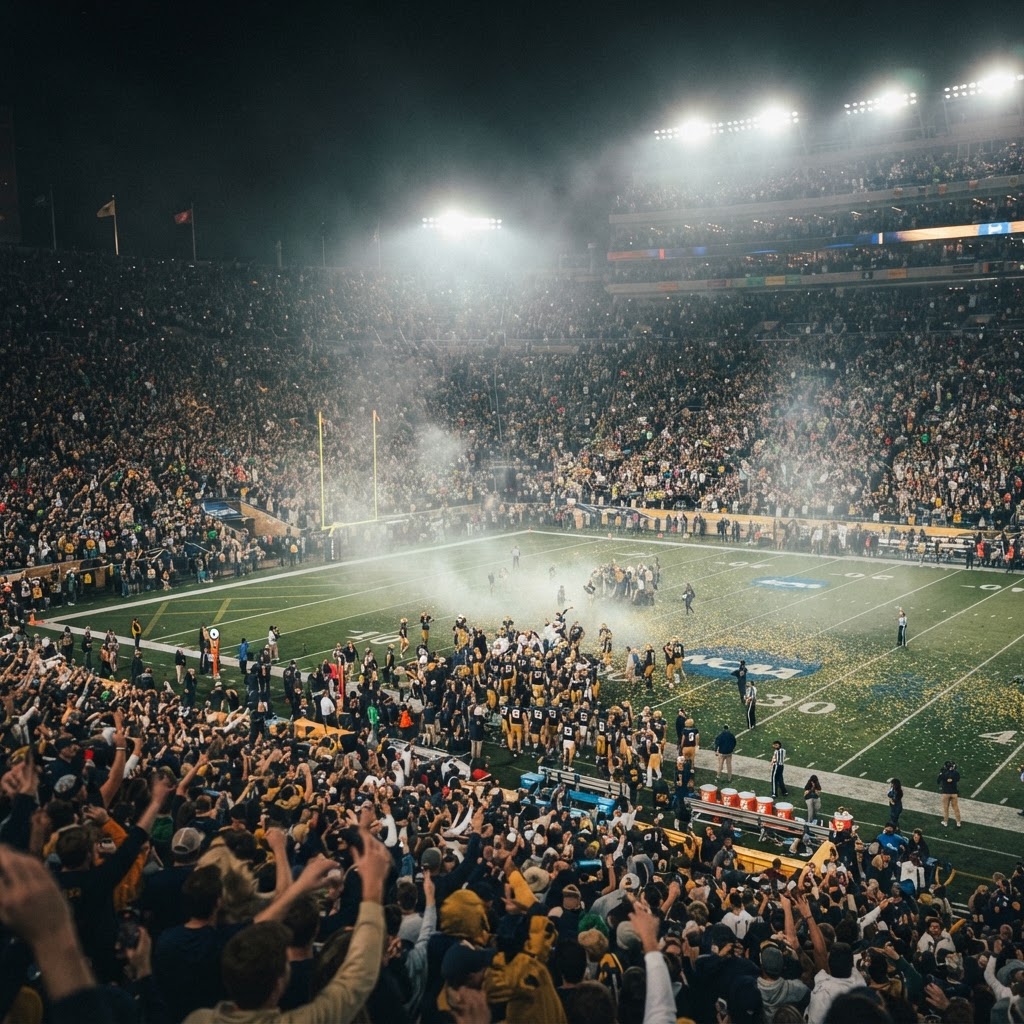
There are rivalry games, and then there is whatever happened in Oxford this weekend when Lane Kiffin walked back onto the field he once owned, this time wearing purple and gold and standing on the wrong sideline. The pre-game framing wasn't hyperbole for hyperbole's sake — this was billed as one of the most toxic rivalry homecomings in college football history, and by the final whistle, that billing looked conservative.
No. 7 LSU came to Oxford to face No. 8 Ole Miss in a top-ten measuring stick that was supposed to be about rankings and playoff positioning. Instead, it became about a single relationship: the coach who left and the quarterback he built who made sure everyone remembered exactly who developed whom. Trinidad Chambliss did not just beat Lane Kiffin's team. He beat it while staring down the LSU sideline after touchdowns, turning a top-ten conference game into theater.
By the time the clock hit zero, Ole Miss had vaulted into the top five of the national rankings, LSU had a loss it will spend the rest of the season explaining away, and Kiffin was sprinting off the field flanked by heavy security while cameras captured every step. The action item for this piece is simple: what actually happened in the numbers, what it means for both programs' ceilings, and why the sport can't stop replaying Kiffin's blank stare.
What the Numbers Actually Say
Strip away the theater for a moment and look at the box score, because the box score alone should worry LSU more than any viral clip. Trinidad Chambliss threw for 248 yards in the first half. Not the game — the half. That is the kind of production that ends games before halftime, and it did exactly that to LSU's margin for error before the third quarter even started.
Chambliss finished with 363 passing yards for the game, which means he added just 115 yards over the entire second half — a sign Ole Miss controlled the tempo and didn't need to keep the foot on the gas once the outcome was decided in the first thirty minutes. That's not incidental. A quarterback who does his damage early against a top-ten defense is a quarterback who is either seeing something before the snap that the opposing coordinator hasn't adjusted for, or facing a defense that hasn't adjusted to him. Against Kiffin's LSU, it was likely both.
The larger number here isn't on the stat sheet — it's the ranking shift. Ole Miss entered at No. 8 and left the weekend in the top five. LSU entered at No. 7 and now has to answer for a loss to the team ranked directly below it. In a sport where committee perception is built on losses more than wins, a No. 7 team losing to a No. 8 team isn't a disaster on paper, but the manner of the loss — a 248-yard first half from the opposing quarterback — reads very differently than a nail-biter.
Was This Actually a Top-Ten Fight, or a Mismatch Wearing a Top-Ten Jersey?
The rankings said this was a top-ten collision. The tape, at least through Chambliss's first-half output, suggested something closer to a rout that later leveled off. That gap between perception and performance matters when trying to figure out whether LSU's No. 7 ranking reflected the team that showed up in Oxford, or a preseason number that hadn't yet been tested against a quarterback playing this well.
Ole Miss, for its part, did exactly what a top-ten team is supposed to do against another top-ten team: it took command early and never allowed the game to become the kind of possession-by-possession dogfight that defines true top-ten-versus-top-ten football. A 248-yard first half against a ranked opponent isn't a fight — it's a statement. The second-half deceleration to 115 yards doesn't undercut that; it reinforces it, because it means Ole Miss had already banked the margin it needed.
For LSU, the uncomfortable question is whether the defense that allowed that first-half number was undone by scheme, by personnel, or by the emotional weight of the environment. Oxford was hostile before kickoff even happened, built entirely around the return of the coach who left for Baton Rouge. It's fair to ask whether LSU's defense spent the first half playing the moment instead of playing Ole Miss's offense — and by the time it settled in, the game was already decided.
What This Means for Both Teams' Ceilings
For Ole Miss, the ceiling conversation just got a lot more interesting. A team that was No. 8 entering the weekend and is now in the top five, off the back of a quarterback who produced 363 passing yards against a top-ten opponent, has playoff-caliber evidence on the resume. Chambliss's willingness to taunt the LSU sideline after touchdowns wasn't just theater for theater's sake — it was a quarterback playing with the kind of command that suggests he believes his ceiling is higher than the number next to Ole Miss's name in the polls.
But there's a real complication for the Rebels moving forward: running back Kewan Lacy's status was evaluated after the game and is now uncertain heading into the matchup with Florida. A team riding this much momentum can't afford to lose a piece of its backfield rotation right as the national spotlight turns fully toward it. Ole Miss's ceiling right now is defined by Chambliss's arm — the question is whether it can stay that high without a full complement of weapons around him.
For LSU, the ceiling question is murkier and more urgent. This was supposed to be the signature road environment where Kiffin's roster — assembled with real financial investment, including a $6 million transfer commitment at quarterback — proved it could win in the sport's nastiest buildings. Instead, LSU left Oxford having allowed 248 first-half yards through the air and having watched its head coach exit under security. A top-ten team can survive a loss. What it can't easily survive is a loss that raises questions about composure, defensive answers, and whether the roster investment is translating to results in the moments that matter most.
The Coaching and Roster Angle Nobody Can Ignore
Lane Kiffin didn't stumble into this game by accident — he had a choice. Before landing at LSU, Kiffin reportedly had the option to take the Florida job instead, and he chose Baton Rouge over Gainesville, which means the decision to leave Oxford was deliberate, weighed, and specific to LSU as a program. That context matters now: this wasn't a coach forced into an uncomfortable rivalry date by scheduling luck. Kiffin picked the path that guaranteed he would eventually have to walk back into Oxford as the visiting coach, and Saturday was that walk.
On the other sideline, Pete Golding didn't try to downplay what Chambliss did. Speaking on the ABC broadcast, Golding credited his quarterback directly, saying simply, "That's who he is." It's a short line, but it does real work — it frames Chambliss's dominant first half and his willingness to stare down the LSU sideline not as an aberration or an emotional outburst, but as an accurate representation of the player Golding has coached him to be. That's a coach putting his name behind his quarterback's swagger in real time, on national television, without hedging.
LSU's roster angle centers on quarterback Sam Leavitt, who transferred from Arizona State on a reported $6 million deal and returned to action after previously dealing with a Lisfranc foot injury. A transfer of that financial magnitude walking into his return from a significant foot injury, in the single most hostile road environment on LSU's schedule, against the coach's former team, is about as difficult a re-entry point as college football offers. Whatever Leavitt's own performance looked like inside that chaos, the setting alone — Kiffin's former building, a taunting opposing quarterback, a defense bleeding yards — was not the gentle re-introduction any $6 million quarterback would have scripted.
Why the Internet Couldn't Look Away
College football's social media apparatus doesn't need much to go viral, but this game handed it everything at once: a coach returning to the site of his departure, a former pupil turned tormentor, and a scoreboard that backed up the taunting instead of making it look foolish. Chambliss's decision to repeatedly stare down the LSU sideline after touchdowns wasn't subtle, and it wasn't going to happen without an equally viral counter-image.
That counter-image arrived in the form of Kiffin's expression — stone-faced, blank, betraying nothing — as Chambliss's taunts and Ole Miss's scoreboard advantage piled up. In an era where every coach's sideline reaction is dissected frame by frame, a blank stare from Kiffin in the building he used to run, against the quarterback he developed, was always going to travel further than almost anything he could have said into a microphone.
The final image sealed it: Kiffin hurrying off the field after the game, flanked by tight security, moving with urgency rather than the customary post-game handshake line lingering. That combination — the stare, the taunts, the hurried exit — is precisely the sequence that turns a Week 3 conference loss into a moment the entire sport is still discussing days later. None of it required embellishment. The ground truth of the day was already the story.
What Happens Next for Both Programs
Ole Miss now carries a top-five ranking into the rest of its schedule, but the immediate concern is personnel, not perception. Kewan Lacy's uncertain status for the Florida matchup means Golding has to figure out how to sustain the offensive balance that made Chambliss's job easier in Oxford. A 363-yard passing performance is impressive on its own, but it's more sustainable with a functioning run game alongside it — and that's exactly the piece now in question heading into Florida week.
For LSU, the path forward is about response, not recovery from a single stat line. A loss to a team ranked one spot behind them, punctuated by a viral sideline reaction and a hurried exit, is the kind of result that either gets fixed quickly with sound defensive adjustments or lingers as a season-defining data point. Leavitt's return from injury inside that environment gives LSU at least one variable that should trend positively as he gets further from the Lisfranc injury and further from the emotional weight of that specific building.
The broader conference stakes are real too. With Ole Miss now in the top five, the margin for error across the rest of its schedule shrinks — one slip and the goodwill from this weekend evaporates. LSU, meanwhile, has to prove this was a bad afternoon in a uniquely hostile environment and not a preview of how it handles pressure on the road against ranked competition for the rest of the season.
The Bottom Line
Take away every camera angle, every taunt, and every viral frame of Kiffin's face, and the football itself still says plenty: a quarterback threw for 248 yards in a half and 363 for the game against a top-ten defense, and his team vaulted into the top five because of it. That's not manufactured drama — that's a dominant performance that happened to come wrapped in the most emotionally loaded homecoming the sport could have scripted.
But strip away the football and the emotional layer still matters, because college football has always been as much about theater as it is about box scores. Lane Kiffin chose LSU over Florida, chose to leave Oxford, and then had to walk back into that building and watch the quarterback he built torch his new team while taunting his own sideline. The stone-faced stare and the hurried exit under security didn't just go viral by accident — they went viral because they captured, in a few seconds, exactly what it costs a coach to leave a place that isn't done with him yet.
Published 9 days ago
Staff
Staff writer for SEC Saturday Wire covering college sports.
Process Notes & Methodology
Treat this as a dual narrative: a legitimate top-ten football result (Chambliss's huge first-half and full-game passing numbers, Ole Miss's ranking jump) intertwined with a viral human-interest/rivalry storyline (Kiffin's return, the taunting, the security exit, Golding's quote). Structure the piece so the numbers are argued and interrogated first to establish legitimacy before pivoting to the emotional/viral angle, then close by fusing both into a single verdict — the football result and the theater are inseparable, and that's why it's the story of the week across the SEC.
The lede establishes the pre-game hype (billed as one of the most toxic rivalry homecomings ever), sets the rankings stakes (No. 7 vs No. 8), and previews the collision of storylines — Kiffin's return, Chambliss's dominance, and the viral aftermath — without giving away the analysis, ending with a clear roadmap of what the piece will interrogate.
Built six body sections plus the lede and bottom line to satisfy the 5-7 section requirement: (1) numbers/stats breakdown of Chambliss's 248 first-half and 363 total yards and the ranking shift, (2) a section directly asking whether this was a true top-ten fight or a mismatch, using the first-half/second-half yardage split as evidence, (3) ceiling implications for both teams including Kewan Lacy's uncertain status as a complicating factor for Ole Miss, (4) coaching/roster angle covering Kiffin's Florida-vs-LSU choice, Golding's ABC quote, and Leavitt's $6M transfer/Lisfranc return, (5) the viral/national reaction section tying together the taunting, Kiffin's blank stare, and the security exit as a single escalating sequence, (6) a forward-looking section on what each program needs next (Lacy's health for Ole Miss, defensive/response questions for LSU). Every fact used is drawn directly from the provided ground truth with no invented stats, scores, or quotes.
The Bottom Line intentionally reframes the entire piece in two moves: first validating the football result as legitimate and dominant on its own merits, then folding in the emotional/viral theater as inseparable from why this particular result matters so much across the conference, landing on the idea that the football and the spectacle are one story, not two.
See something wrong? Fix it.
We're the first crowdsourced college football site. Submit corrections — our editors review every one.