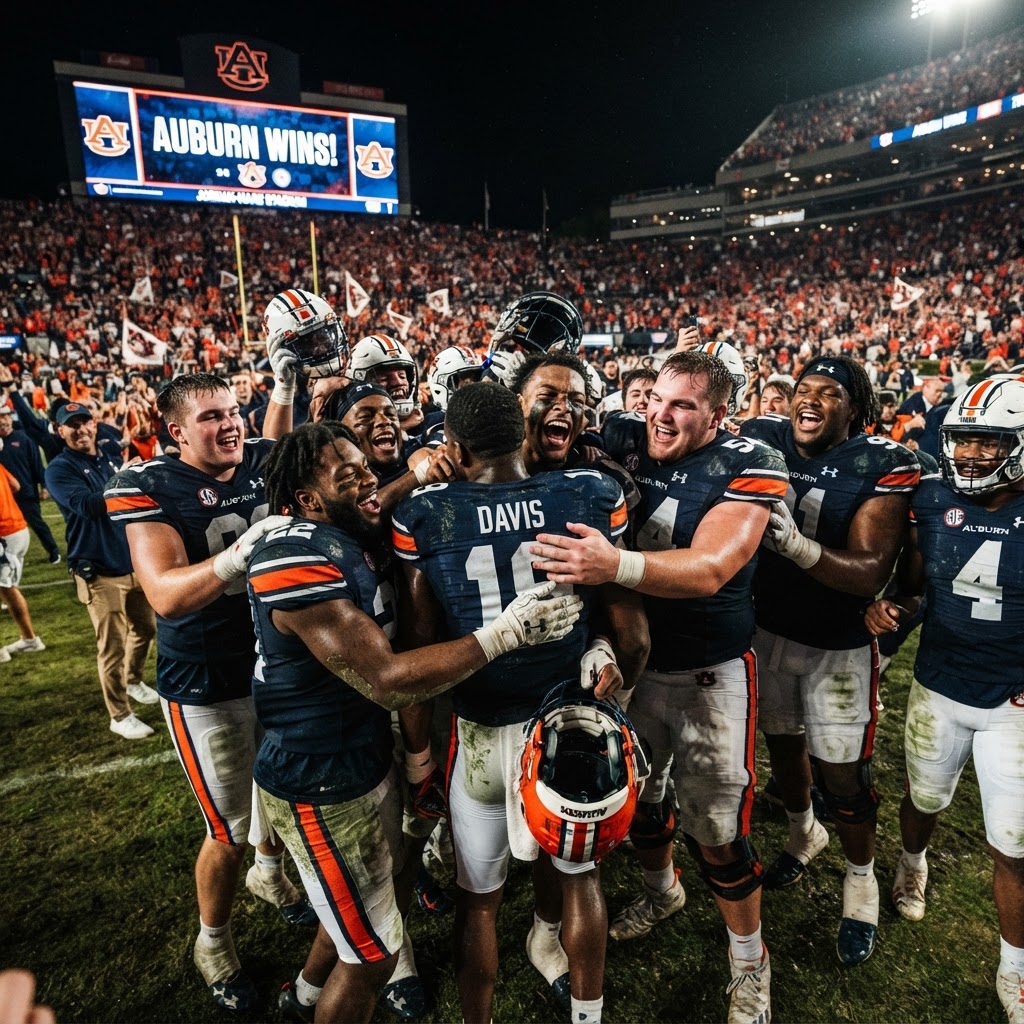
Special Teams Spark Saves Auburn in Narrow Victory Over Vanderbilt
Byrum Brown leads the Tigers, but a critical blocked punt proves the difference in a grind-it-out win at Jordan-Hare.

Final: Auburn Tigers 21, Vanderbilt 15
In a contest defined more by attrition than artistry, the Auburn Tigers survived a gritty Vanderbilt challenge on Saturday afternoon. The defining moment of the game arrived when the Auburn special teams unit broke through the Vanderbilt line to block a punt, which was promptly recovered in the end zone by Cade Carlson. That touchdown served as the ultimate cushion in a game where offensive rhythm was frequently stifled by stubborn defensive play on both sides of the ball.
While the offense struggled to find consistent explosive plays, Byrum Brown provided just enough dynamism to keep the chains moving. Brown accounted for both of Auburn’s offensive touchdowns—one through the air to Chas Nimrod and another on a gritty keeper—to ensure the Tigers maintained a narrow lead throughout the fourth quarter. Vanderbilt fought until the final whistle, but the six-point margin proved insurmountable after the special teams breakdown proved too costly to overcome.
What Went Right
- Byrum Brown's Dual-Threat Efficiency: Brown demonstrated composure in a high-pressure environment, directly contributing to both of Auburn's offensive scores and managing the clock effectively in the final minutes.
- Special Teams Impact: The punt block by the special teams unit was the single most impactful play of the afternoon, serving as the decisive scoring swing in a one-possession game.
- Red Zone Discipline: The defensive front limited Vanderbilt’s ability to find the end zone, forcing the Commodores to settle for field goals rather than capitalizing on drives.
What Went Wrong
- Offensive Inconsistency: Auburn struggled to sustain long scoring drives, often stalling out in the middle of the field and forcing the special teams and defense to bail the unit out of precarious positions.
- Third-Down Conversion Rate: The inability to consistently move the sticks on third down kept Vanderbilt in the game far longer than it should have been, turning a home matchup into a tense nail-biter.
Stock Up / Stock Down
- Stock Up: Byrum Brown (QB) – His ability to manufacture points despite limited help around him keeps the offense afloat.
- Stock Up: Special Teams Unit – Their ability to flip the game with a block and recovery showed elite situational awareness.
- Stock Down: Offensive Line – The protection failed to provide consistent lanes for the run game, leading to stagnant drives.
- Stock Down: Perimeter Playmakers – Outside of Nimrod, there was a noticeable lack of separation from the receiving corps throughout the game.
What It Means for Tennessee
- The narrow victory over Vanderbilt highlights a concerning lack of offensive firepower for head coach Alex Golesh. As the Tigers prepare to face Tennessee next week, the margin for error shrinks significantly. Auburn must tighten its pass protection and find a way to sustain longer drives, or they risk being overwhelmed by the pace and physicality the Volunteers will bring to the table in the upcoming SEC showdown.
Published 22 days ago
Staff
Staff writer for SEC Saturday Wire covering college sports.
Process Notes & Methodology
Focus on the struggle of the win while highlighting the special teams play as the catalyst.
Use the special teams score as the immediate 'hook' to define the game's narrow outcome.
Use the stats provided by Byrum Brown and the special teams block to illustrate the team's reliance on specific units.
Pivot to the upcoming Tennessee game as a reality check for the team's current offensive performance level.
See something wrong? Fix it.
We're the first crowdsourced college football site. Submit corrections — our editors review every one.