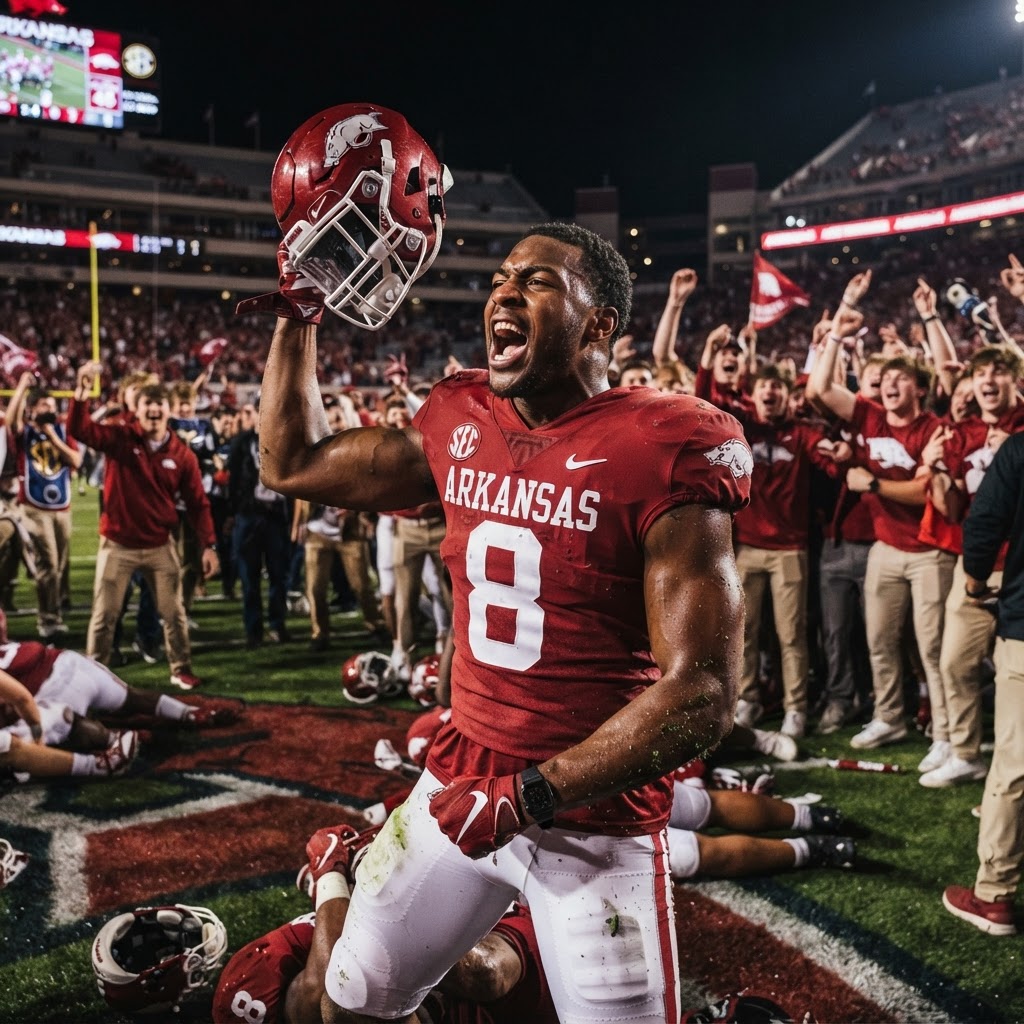
A Razorback Reset: Finding Identity Under Ryan Silverfield
After a grueling clash in Athens, the Arkansas Razorbacks must recalibrate their Veer and Shoot attack as the 2026 season enters a critical pivot point.

The Silence of the Aftermath
The echoes of Sanford Stadium have finally faded, but the sting of a 45-17 defeat to Georgia remains sharp. In the damp aftermath of a Saturday spent chasing shadows in the SEC, the Arkansas Razorbacks find themselves at a crossroads that defines the early chapters of the Ryan Silverfield era. The atmosphere in Fayetteville is one of quiet determination; there is no panic, only the sobering realization that the climb toward SEC relevance is a vertical ascent requiring absolute precision.
The Architect of the New Guard
Ryan Silverfield, now steering the Razorback ship in his first year at the helm, faces a mandate of structural transformation. Tasked with embedding the Veer and Shoot offensive scheme into the Arkansas bedrock, Silverfield is operating with a clear-eyed understanding of the gap between potential and production. It is not merely a question of schemes, but of temperament—a cultural recalibration that began the moment he stepped onto campus on November 30, 2025.
The Burden of the Backfield
At the center of this transition is KJ Jackson, the signal-caller charged with conducting the high-tempo chaos of the Veer and Shoot. When the field stretches and the windows narrow against elite SEC secondaries, the responsibility falls squarely on his shoulders. The offense is designed to break defenses through speed and spatial manipulation, yet as the 2026 season marches forward, the efficacy of this system will be judged by Jackson's ability to maintain composure when the initial read is erased.
In the relentless theater of the SEC, a system is only as potent as the resolve of the man tasked with distributing the ball under fire.
Defensive Anchors in a Shifting Scheme
While the offense chases rhythm, the 4-2-5 defensive structure is tasked with providing a safety net. With veterans like Hunter Osborne and CJ Brown anchoring the unit, the defense has been forced to adapt to the rigorous demands of modern spread offenses. The path forward for Arkansas is simple: the front must create havoc to allow the 4-2-5 secondary to capitalize on forced errors, turning a defensive stand into an offensive opportunity.
The Road Ahead
The 2026 season has already provided a full spectrum of lessons, from the opening-week victory over North Alabama to the sobering reality checks against Utah and Georgia. As the schedule unfolds, the Razorbacks must decide if these early hurdles are scars that define them or foundation blocks for a program still finding its footing. The season is not yet written, and the chance to rewrite the narrative starts with the next snap in practice, where the focus remains on the foundational elements of Silverfield’s identity.
Published 7 days ago
Staff
Staff writer for SEC Saturday Wire covering college sports.
Process Notes & Methodology
The article centers on the transition process for a team adapting to a new head coach and a specific offensive system. This angle is chosen to provide context on the team's current development phase following their recent loss.
The opening creates a vivid scene of the team returning from the Georgia game to establish the emotional stakes of the 2026 season. It anchors the narrative in the recent game context to build credibility.
I integrated details about the head coach, the team's specific schemes (Veer and Shoot/4-2-5), and the primary quarterback to explain the current state of play. These facts demonstrate the team's identity shift as they balance new tactical approaches with returning veteran leadership.
The closing section provides a forward-looking perspective on the 2026 season, framing the upcoming schedule as a test of the program's foundational growth rather than a simple string of wins and losses.
See something wrong? Fix it.
We're the first crowdsourced college football site. Submit corrections — our editors review every one.