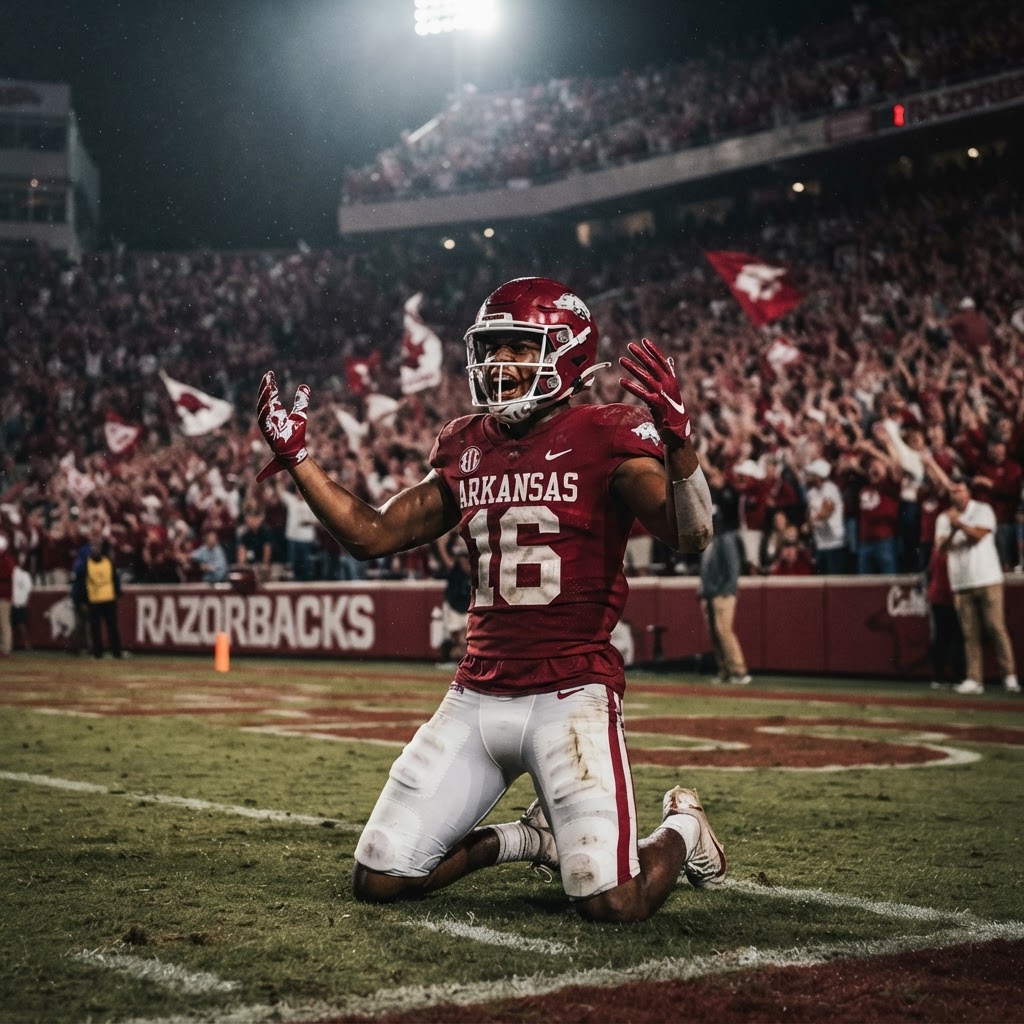
Arkansas Razorbacks 2026 Outlook: Silverfield Era Begins Amid Rebuilding Phase
As Spring Ball & Recruiting 2026 winds down, the Razorbacks face significant questions and low expectations under new leadership.

As we approach the heart of the 2026 season, the Arkansas Razorbacks find themselves in a period of transition. With head coach Ryan Silverfield entering his first year at the helm, the program is firmly in a rebuilding phase.
The most pressing narrative currently unfolding is the ongoing quarterback competition between KJ Jackson and AJ Hill. With no clear starter established, the coaching staff, led by offensive coordinator Tim Cramsey, remains focused on evaluating which signal-caller can best lead the unit.
Defensively, coordinator Ron Roberts is tasked with shoring up the group following the departure of key talent to the NFL. Compounding the challenge, the program faces significant skepticism from the media, having been picked to finish last in the SEC in the 2026 preseason poll.
While the team navigates these competitive hurdles, the physical landscape of the program is also evolving, with Razorback Stadium currently undergoing extensive technological upgrades including new LED, laser, and audio systems.
Published 3 months ago
Staff
Staff writer for SEC Saturday Wire covering college sports.
Process Notes & Methodology
The angle focuses on the 'transitional' nature of the 2026 Razorbacks. It balances the reality of the preseason media ranking with the internal developments of the coaching staff and stadium infrastructure.
The introduction anchors the piece on the arrival of head coach Ryan Silverfield. It sets the stage for a 'building' year by emphasizing his first season.
The body content integrates the QB battle between KJ Jackson and AJ Hill, the roles of coordinators Tim Cramsey and Ron Roberts, and the external pressure of the last-place preseason media projection. It connects these internal team dynamics with the tangible upgrades occurring at Razorback Stadium.
The closing pivot transitions from current competitive struggles to the infrastructure improvements being made at the stadium. It frames these upgrades as a sign of long-term investment amidst short-term uncertainty.
See something wrong? Fix it.
We're the first crowdsourced college football site. Submit corrections — our editors review every one.