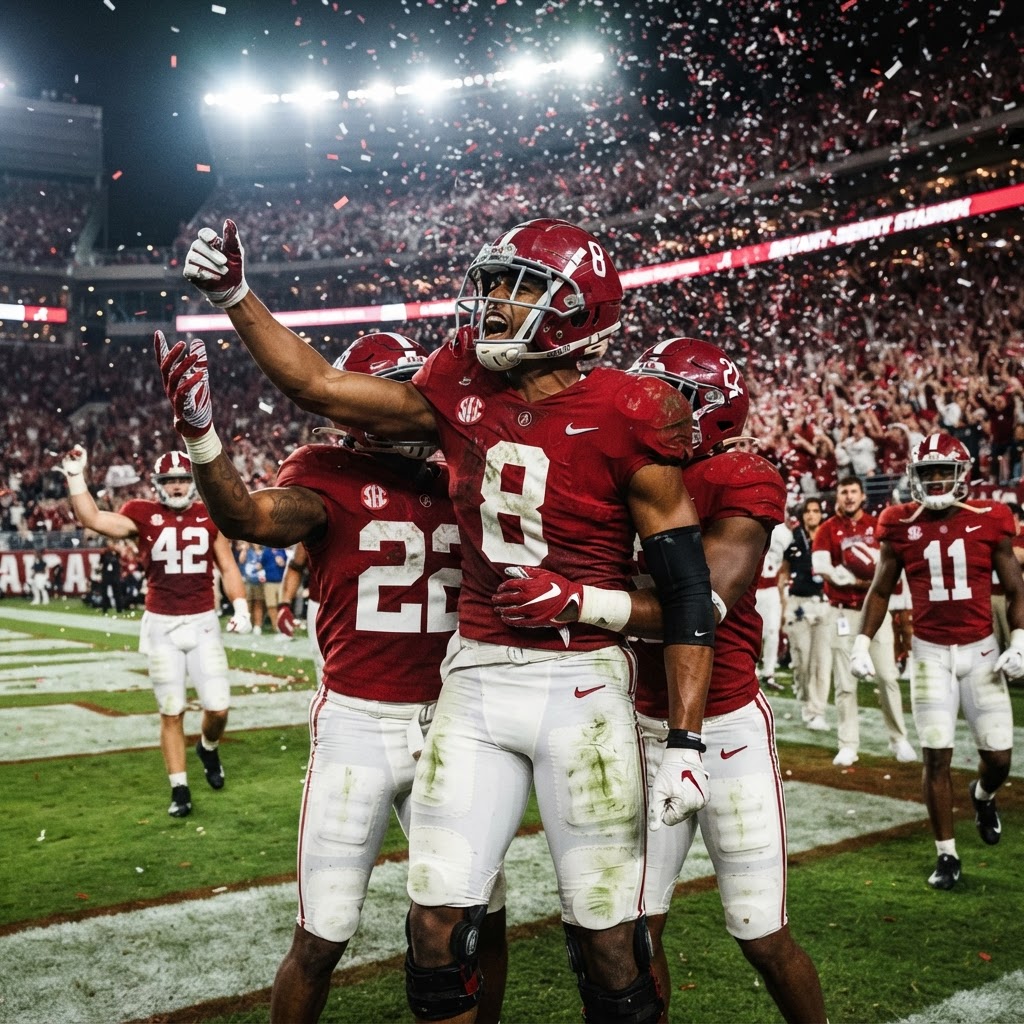
The Crimson Tide's Portal Integration: Reshaping Alabama for 2026
As Kalen DeBoer enters his third campaign, Alabama's strategic influx of talent is defining a new chapter in Tuscaloosa.

A New Tide Rises
The humid air of September hangs heavy over Bryant-Denny Stadium, but the atmosphere inside the Alabama football facility is distinctly cooler and more calculated. As we sit here in the early days of September 2026, the roar from the 48-10 victory over East Carolina still echoes, yet the focus has already shifted. Under the leadership of head coach Kalen DeBoer, who is now embarking on his third season at the helm, the Crimson Tide are quietly constructing a roster designed for versatility and depth. In an era where the college football landscape is forged in the fires of the transfer portal, Alabama is finding its rhythm through intentional recruitment and integration.
The Art of the Personnel Pivot
Modern success in the SEC is rarely about holding onto the status quo. For Alabama, the 2026 season represents a pivot point. With the integration of new talents such as Desmond Umeozulu, Carmelo O’Neal, Caleb Woodson, Tyrell Miller, Racin Delgatty, and Ethan Fields, the coaching staff is signaling a clear intent to balance fresh competition with a foundation of stability. These additions are not merely depth pieces; they represent a tactical infusion of talent designed to challenge returning starters like Yhonzae Pierre, Zabien Brown, Keon Sabb, and Bray Hubbard. The goal is to create an environment where the internal pressure of practice meets the external demands of the conference schedule.
Stability Amidst the Noise
While outsiders might perceive the Crimson Tide as flying under the radar compared to the lofty, suffocating expectations of the past, there is a quiet confidence growing within the building. The organizational structure has been bolstered by the additions of Adrian Klemm for the offensive line and Cameron Cleminson for outside linebackers. This infusion of coaching experience provides the structural backbone necessary to handle the integration of new faces alongside established veterans. The chemistry between these returning leaders and the incoming group of transfers will be the primary barometer for how far this team can climb as the season progresses.
Defining the Future
In the high-stakes world of modern football, roster composition is a living, breathing entity. Every snap is a testament to the quality of the scouting and the efficiency of the integration process. The strength of this Alabama squad lies in its capacity for evolution, proving that a team can respect its heritage while aggressively adapting to the realities of the current landscape. As the 2026 season continues, the success of the Crimson Tide will be measured not just by the scoreboard, but by how seamlessly these new components coalesce into a singular force.
Published about 1 month ago
Staff
Staff writer for SEC Saturday Wire covering college sports.
Process Notes & Methodology
The angle focuses on Kalen DeBoer's third-year mission to optimize the roster by blending experienced returning starters with a strategic group of transfer portal acquisitions. This reflects the reality that modern SEC teams must be agile in personnel management to stay competitive.
The hook uses the recent 48-10 victory over East Carolina to anchor the story, setting a scene of momentum while transitioning into the broader context of the 2026-2027 season.
I utilized the specific names of incoming transfers (Umeozulu, O’Neal, etc.) and returning starters to illustrate the roster transition. I also wove in the new coaching staff additions to show how the organizational foundation supports this period of integration.
The closing highlights the importance of chemistry and ongoing evolution, setting up a forward-looking perspective on how Alabama will tackle the remainder of the 2026-2027 SEC schedule.
See something wrong? Fix it.
We're the first crowdsourced college football site. Submit corrections — our editors review every one.