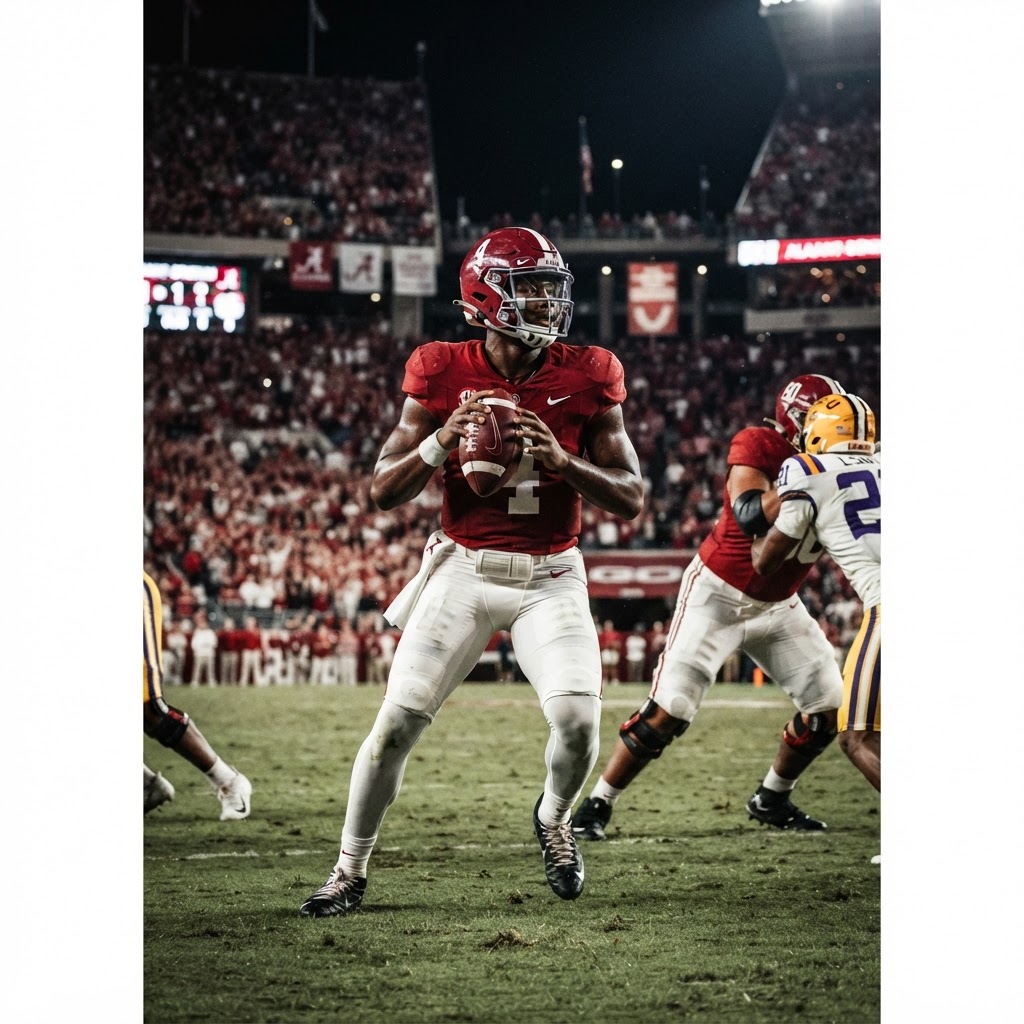
Crimson Horizon: Alabama Navigates a New Identity in the 2026 Season
As Kalen DeBoer enters his third campaign, the Crimson Tide are embracing a quiet intensity while integrating a reloaded roster.

The Quiet Before the Storm
The air in Tuscaloosa carries a different weight this September. Gone are the days of suffocating preseason rankings that heralded an inevitable march to the postseason; instead, the 2026 Alabama Crimson Tide have slipped into the shadows, a position that feels unfamiliar yet strangely liberating. Following a commanding 48-10 victory over East Carolina to open the campaign, the program finds itself in a state of calculated transition, refining its identity under head coach Kalen DeBoer.
A Blueprint for Continuity
Kalen DeBoer enters his third season at the helm, and the mission is clear: improvement through evolution. This is not the Alabama of yesterday, but a program actively molding its future. With the recent addition of Adrian Klemm to lead the offensive line and Cameron Cleminson tasked with mentoring the outside linebackers, the coaching staff is signaling a focus on technical precision and foundational toughness. The team is not relying on legacy alone; they are building a bridge to the next era of Crimson Tide football.
The Power of Integration
The most intriguing subplot of this season involves the seamless, or at times volatile, integration of new talent. The roster has been bolstered by significant transfer portal activity, including Desmond Umeozulu, Carmelo O’Neal, Caleb Woodson, Tyrell Miller, Racin Delgatty, and Ethan Fields. These additions are being woven into a defensive core anchored by returners like Yhonzae Pierre, Zabien Brown, Keon Sabb, and Bray Hubbard. The successful synthesis of these veteran leaders and incoming depth will be the ultimate arbiter of Alabama’s success in the 2026 season.
Strategic Flexibility as an Asset
In modern college football, the ability to adapt is the ultimate currency. Without a singular narrative focus on the quarterback position, the team has leaned into a collective approach that prioritizes system fluidity over individual stardom. This under-the-radar status is a strategic asset, allowing DeBoer to experiment with schemes and personnel rotations that keep opponents guessing. The Tide are no longer playing to satisfy a national mandate; they are playing to maximize their own internal capability.
The Analytics of Ambition
The strength of a championship-caliber unit is not found in the luster of past banners, but in the relentless efficiency of the current roster’s development curve. As the Tide looks toward the remainder of the 2026 season, the focus shifts to how these individual components coalesce into a unified force under the pressure of the SEC grind. The transition period is ending; the test of the new identity begins now.
Published about 1 month ago
Staff
Staff writer for SEC Saturday Wire covering college sports.
Process Notes & Methodology
The angle focuses on Alabama's evolution in year three under DeBoer, specifically highlighting their under-the-radar status and the integration of new transfers. This storyline is relevant because it frames their 2026 season trajectory as a rebuilding-to-contention arc.
The opening uses the recent 48-10 win over East Carolina to ground the current season's momentum while acknowledging the shift in public expectations.
The body content integrates specific roster additions like Umeozulu and Fields alongside key returners like Pierre and Sabb. It also highlights the coaching additions to underscore the organizational focus on development.
The closing pivots to the pressure of the upcoming SEC slate, emphasizing that the team's identity is being forged through the development of their new roster configuration.
See something wrong? Fix it.
We're the first crowdsourced college football site. Submit corrections — our editors review every one.